

Eupatorium purpureum
- noun
- Specialized
- Clusters of purple-spotted flowers help Eupatorium purpureum stand out in the wildflower meadow.
Examples
-
The garden attracted butterflies thanks to the blooming Eupatorium purpureum beside the pond.
-
The Eupatorium purpureum blooms beautifully in late summer.
-
Many herbalists value Eupatorium purpureum for its purported medicinal properties.
-
Have you seen the Eupatorium purpureum at the botanical garden?
-
In late summer, the tall stems of Eupatorium purpureum are adorned with clusters of purple-spotted flowers.
-
The vibrant clusters of Eupatorium purpureum attract pollinators in the garden.
-
Many gardeners choose Eupatorium purpureum for its striking purple flowers and its ability to thrive in moist areas.
Synonyms

A wild plant with leaves that grow around the stem and flowers with purple spots

A tall North American plant with leaves that grow in circles and pink or purple flower clusters that attract butterflies
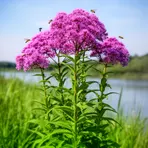
A tall North American plant with leaves around the stem and clusters of purple-pink flowers

A tall North American plant with pink or purple flower clusters found in wet places
Surface Forms
Morphology
Eupatorium + purpureum
This is a Latin binomial (scientific) name for a specific plant species; the overall meaning (‘Joe‑Pye weed’ / a particular herb) is not a predictable compositional result of ordinary English words. 'Eupatorium' is a technical genus name and 'purpureum' is a non‑English (Latin) form not attested in the dictionary entry, so a B1 learner would not reliably infer the species identity or common name from the parts.
Etymology
Eupatorium purpureum is often called 'Joe-Pye weed' and one popular story says it was named after a man called Joe Pye who used the tall plant as a folk remedy for fevers. The Latin parts Eupatorium and purpureum point to the plant group and its purple flowers, so the name reminds you of a tall purple flower once used as a home medicine.

