

Eupatorium maculatum
- noun
- /juˈpɔːtəriəm məˈkjuːlətəm/
- Specialized
- Gardeners often plant Eupatorium maculatum to attract butterflies with its colorful flower heads.
Examples
-
Eupatorium maculatum grows naturally in moist meadows and along stream banks across eastern North America.
-
The tall stems of Eupatorium maculatum make it a distinctive feature in wildflower gardens.
-
The Eupatorium maculatum is often found near wetlands.
-
Have you seen the Eupatorium maculatum blooming this year?
-
Eupatorium maculatum is often used in landscaping because its clusters of pink flowers attract many pollinators.
-
You can identify Eupatorium maculatum by its whorled leaves and tall stature in summer gardens.
-
Eupatorium maculatum thrives in moist areas, making it a common sight in wetlands across the Northeast.
Synonyms
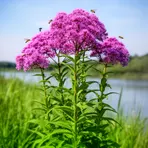
A tall North American plant with leaves around the stem and clusters of purple-pink flowers

A tall North American wild plant with clusters of purple flowers that attract butterflies

A tall North American plant with pink or purple flower clusters found in wet places

A North American flowering herb with leaves in rings and small purple spotted flowers
Surface Forms
Morphology
Eupatorium + maculatum
This is a scientific binomial composed of the genus name Eupatorium and a species epithet maculatum; if a learner knows both constituents (and recognizes maculatum as the Latin adjective ‘spotted’), the overall meaning — a spotted Eupatorium (spotted Joe‑Pye weed) — is directly derivable. Although many learners may not know Latin epithets, the semantic composition follows a regular, transparent taxonomy pattern common across languages.
Etymology
Eupatorium maculatum is a two-part plant name. The first part, Eupatorium, may come from an old ruler named Eupator, and the second part, maculatum, is Latin for 'spotted', a clear picture because the plant often has spotted stems or leaves, so the name points to the 'Joe-Pye weed'.

