
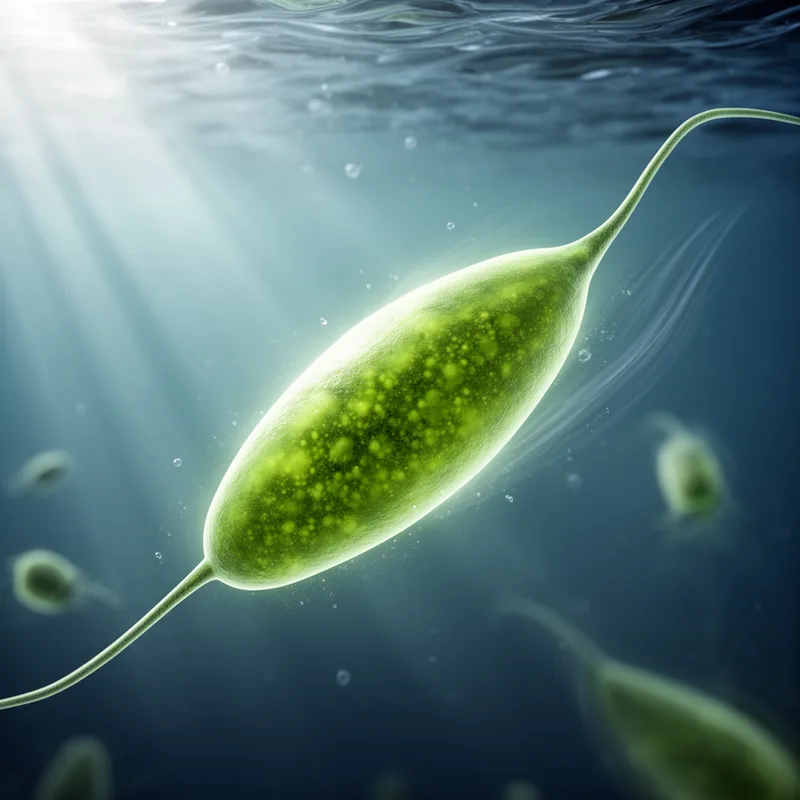
Euglena


 1
8.9
- noun
- /juˈɡlinə/
- Specialized
- The appeal of this system rested on making the plant and animal kingdoms monophyletic and solving the problem of intermediates like Euglena that had been claimed by both botanists and zoologists.
Examples
-
Euglena are often found in both freshwater and seawater, where they can photosynthesize and move using their single flagellum.
-
So you can measure how large Euglena is, you can measure how fast it moves.
-
Heritable changes in Euglena and fruit flies can be triggered by chemically or physically induced mass elimination of elements containing nucleic acid (see box page 702):
Academic text (1993) -
Scientists have observed Euglena under a microscope to study their unique movement and photosynthetic capabilities.
-
In aquatic ecosystems, Euglena play an important role as primary producers due to their ability to harness sunlight for energy.
Synonyms
 63
3.6
A simple green plant that grows in water and has no roots, stems, or leaves
 4
3.0
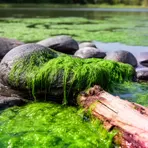
A green living thing that grows on wet rocks, damp wood, or still water
 1
8.1
A very small living thing like a water plant that you can only see with a microscope
 1
9.9
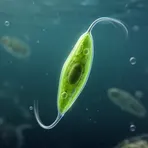
A one-celled living thing in fresh and salt water that moves with a whip-like tail
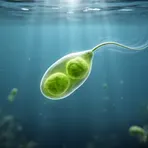
A single-celled living thing in water, often green, with a tail used to move
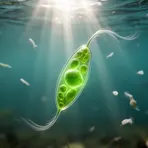
A single-celled water organism with a whip-like tail that often makes food from light
Surface Forms
Etymology
Euglena comes from Greek parts eu- meaning 'good' and glēnē meaning 'eye'. Many of these single cells have a small eyespot to sense light, so the name reminds us they have a 'good eye' that helps them move toward light.