

Eugenia aromaticum
- noun
- Specialized
- The dried flower buds of Eugenia aromaticum are harvested to produce cloves used in cooking.
Examples
-
Eugenia aromaticum is widely grown in Indonesia and Sri Lanka for its aromatic flower buds.
-
Botanists classify the clove tree as Eugenia aromaticum in older texts, though it is now often called Syzygium aromaticum.
-
The spice Eugenia aromaticum is commonly used in cooking.
-
Many chefs prefer Eugenia aromaticum for its strong flavor.
-
Eugenia aromaticum is cultivated for its dried flower buds, which are used to make the spice known as cloves.
-
In cooking, Eugenia aromaticum adds a unique flavor to dishes, especially in holiday recipes.
-
Eugenia aromaticum, commonly known as the clove tree, thrives in tropical climates with its bright red flowers.
Synonyms

 1
4.9
1
4.9

A tropical evergreen tree whose dried flower buds make the spice

A tropical evergreen tree with red flowers that is grown for its dried flower buds called cloves

Tropical tree grown for its scented flower buds called cloves
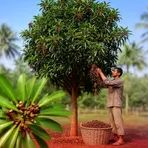
An evergreen tropical tree that makes small brown flower buds used as a spice and in medicine
Surface Forms
Morphology
Eugenia + aromaticum
The binomial combines the genus name 'Eugenia' (a tropical tree) with an adjective meaning 'aromatic' (cognate with English 'aromatic'), so a learner who knew both constituents could infer 'an aromatic Eugenia tree'. However, the precise botanical identity (the clove tree) and the culinary use (dried flower buds) are specialized facts not derivable from the parts, so the transparency is only partial.
Etymology
Eugenia aromaticum comes from the tree's strong smell. The word aromaticum means 'smells good', and because its fragrant flower buds are dried to make 'cloves', the name points to the spice we get from the tree.