
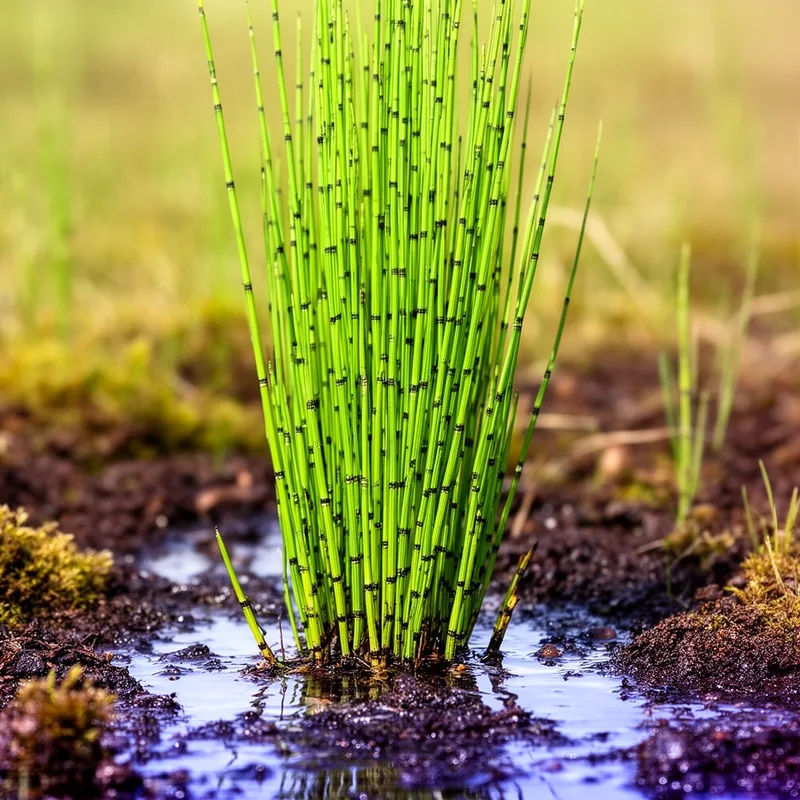
Equisetum palustre
- noun
- Specialized
- Equisetum palustre is often found in wetland habitats across northern regions.
Examples
-
Some farmers avoid grazing livestock where Equisetum palustre is abundant, as it can be toxic.
-
Researchers identified Equisetum palustre as a predominant plant in the bog's ecosystem.
-
Equisetum palustre commonly grows in the marshy meadows surrounding the lake.
-
The Equisetum palustre thrives in marshy areas.
-
Have you seen Equisetum palustre growing near the lake?
-
In wetlands, Equisetum palustre can be seen growing among other aquatic plants.
-
The scouring-rush Equisetum palustre plays a crucial role in the biodiversity of boggy environments.
Synonyms
A common plant that grows in marshes with thin green stems
Surface Forms
Morphology
Equisetum + palustre
The name is transparently compositional: the genus 'Equisetum' refers to horsetail plants and the epithet 'palustre' means 'of marshes' (marshy). Therefore a learner who knows both constituents can infer this is the marsh/ bog-dwelling horsetail species, following the regular pattern of Latin binomials.
Etymology
Equisetum palustre comes from Latin: Equisetum means 'horse's tail' because the plant's long, jointed stems look like a horse's tail, and palustre means 'of the marsh' because it grows in wet, boggy places. So the name gives a simple picture—a horsetail plant that lives in marshes.

