

Epipaleolithic
- noun
- /ˌɛpɪˌpeɪlɪˈlɪθɪk/
- Specialized
- And such very low populations stopped existing with the arrival of the Neolithic (if not earlier with the Magdalenian and Epipaleolithic demographic boom, which may well have been more striking than all the Neolithic together).
Examples
-
Archaeologists believe that the shift towards permanent dwellings occurred during the Epipaleolithic phase of human history.
-
The tools discovered at the archaeological site date back to the Epipaleolithic era, showing advancement in technology.
-
During the Epipaleolithic period, early humans began to experiment with planting seeds in the ground for farming.
Synonyms

The middle part of the Stone Age when people used small stone tools and began to live in one place
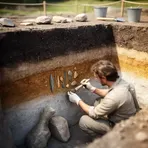
The middle period of the Stone Age, beginning about 15,000 years ago
Surface Forms
Morphology
Epipaleolithic = Paleolithic (semi-transparent) = epi + paleolithic
Formally 'epi-' + 'Paleolithic' yields 'after/upon the Paleolithic', but 'epi-' is a technical combining form and the term is specialized, so the relation is not obvious to an average B1 learner.
Etymology
Epipaleolithic comes from Greek parts: epi- meaning 'after', paleo- meaning 'old', and -lithic meaning 'stone'. So it means 'after the Old Stone Age', which fits the middle Stone Age when people began moving from hunting and gathering to more settled life.

