
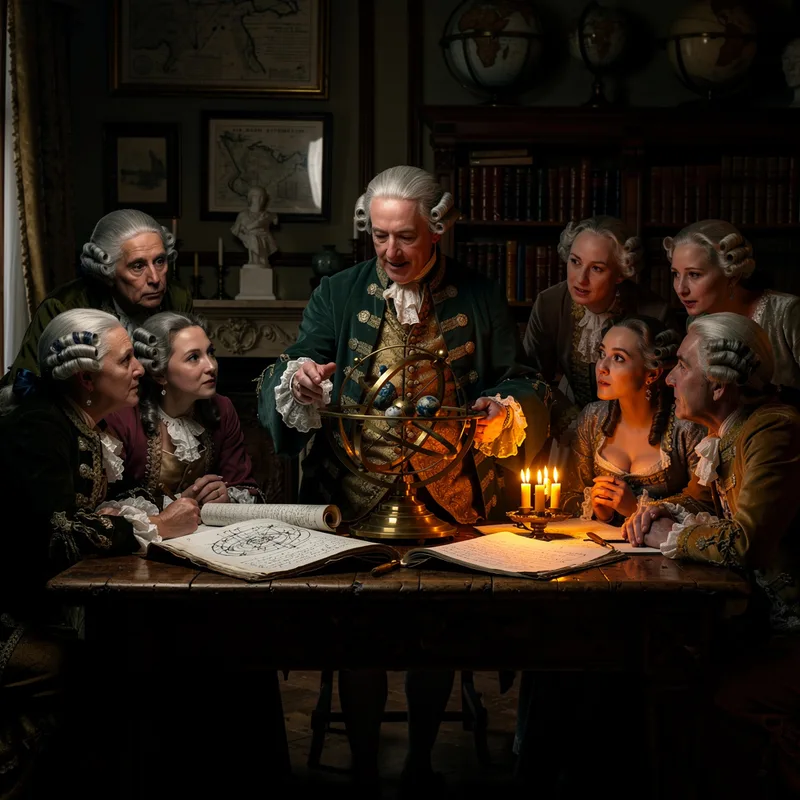
Enlightenment
 34
6.3
34
6.3

- noun
- /ɪnˈlaɪtənmənt/
- The justification for such an endeavor can be drawn from Enlightenment values as well as common human decency.
- Enlightenment thinkers
- Enlightenment philosophers
- Enlightenment values
Loading YouTube…
Watch on YouTubeBut he would begin to move Yale into the Enlightenment and into teaching science.
- But he would begin to move Yale into the Enlightenment and into teaching science.
- And what he means by that is pre the Enlightenment, the gods were in control.
- That is a radical, post enlightenment, scientifically informed mindset.
- We have spent the last four years debating the value of the Enlightenment with the reality show host.
- Those are all ideas that come out of the much maligned enlightenment.
- And then how does critical social Justice Act as counter enlightenment?
- Something in the Neolithic period, something in the post religion period of the Enlightenment and the industrial revolution.
- That's why it was popular in the Enlightenment and around the founding of of America.
- She was bringing these new Enlightenment values for like non hierarchical big public works.
- What are for you or some of the key markers that show the impact of enlightenment principles or enlightenment thinking to our world?
- All of that in the Enlightenment becomes seen as vain.
- And this is part of what the Enlightenment itself is oriented towards.
- It it enabled the Enlightenment, right?
Examples
-
Consider, for instance, one of the most common assertions about Enlightenment thought: its penchant for universal moral principles.
Academic text (1999) -
The ideas generated during the Enlightenment still influence modern democratic societies today.
-
Science and the Enlightenment can bring the best and it can bring the worst.
-
Let the new age of enlightenment begin.
-
A public can only achieve Enlightenment slowly.
-
So all of those, all of this criticism of the Enlightenment occurred within the Enlightenment itself.
-
Most of us, left or right, were heirs to the Enlightenment tradition.
Academic text (1999) -
As the founding fathers embraced knowledge from the Enlightenment period, they tended more toward reason than beliefs.
Academic text (2017) -
Yet Bougainville, a man of the Enlightenment, always had sympathy for natives anywhere.
Fiction book (1991) -
The Enlightenment was a crucial period that promoted reason and individual thought in Europe.
Synonyms
 3
6.3
3
6.3
A period in Europe when people valued reason, science, and personal freedom more than old traditions
 1
5.8
1
5.8
A European movement that uses reason and science to question old beliefs and support people's rights

A movement that values reason and science over religion
Compounds
1
5.8
A European movement that uses reason and science to question old beliefs and support people's rights
Surface Forms
Morphology
Etymology
Enlightenment comes from the parts en- ('to make') and light ('brightness' or 'knowledge'), so it literally means 'to bring light' into the mind. That's why the historical Enlightenment was a time when thinkers tried to spread reason and science and move people away from old beliefs.