
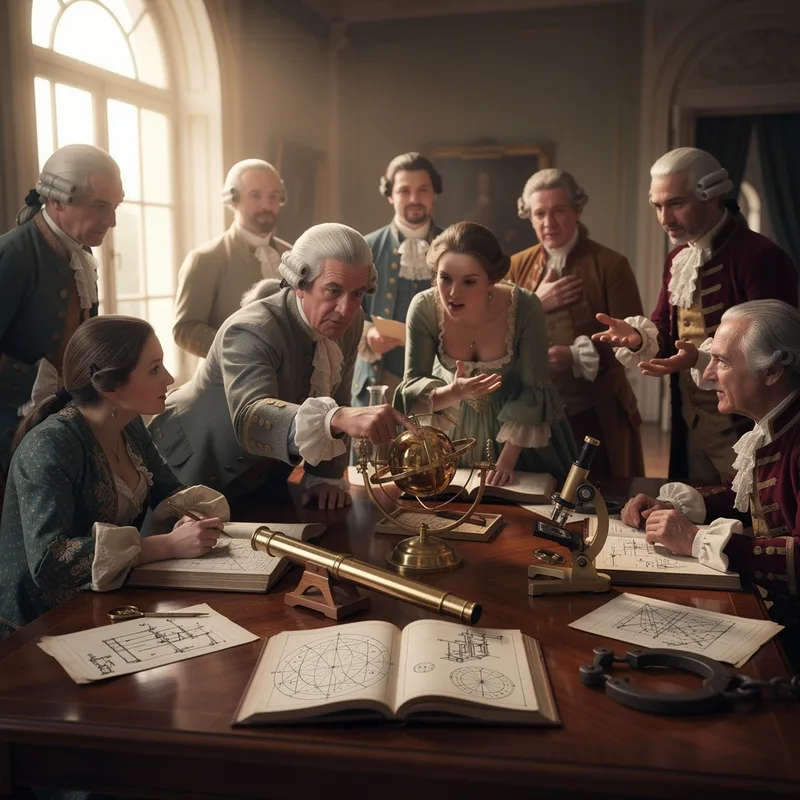
Age of Reason
 3
6.3
3
6.3

- noun
- /eɪdʒ əv ˈriːzn/
- The Age of Reason marked a significant shift in thought, prioritizing science and logic over tradition.
Loading YouTube…
Watch on YouTubeThe light has been turned down on the age of reason.
- The light has been turned down on the age of reason.
Examples
-
Sir Isaac Newton helped to spark the Age of Reason.
Blog text (5) -
Philosophers like John Locke thrived during the Age of Reason, advocating for individual rights and rationalism.
-
Was this all I could retrieve from our four years here, from my own transit into the age of reason?
Blog text (34) -
Alexandra, you were born into an age of reason, an age of science.
-
Yes, sir, a veritable age of reason, like the one they had in France.
-
I know that rationalism has had its day; the Age of Reason is no more.
Fiction book (2000) -
It represents the dawn of the age of reason.
-
Yet, The Age of Reason is not atheistic: it promotes natural religion.
Blog text (27) -
John Locke was one of the first great thinkers of the Enlightenment Era (or Age of Reason).
Blog text (33) -
Many consider the Age of Reason to be a pivotal era that laid the groundwork for modern democratic ideals.
Synonyms
 34
6.3
34
6.3
A European movement in the late 1600s and 1700s that values reason and questions old beliefs
 1
5.8
1
5.8
A European movement that uses reason and science to question old beliefs and support people's rights
A movement that values reason and science over religion
Surface Forms
Morphology
The phrase is directly compositional: a B1 learner who knows 'age' (a historical period) and 'reason' (rational thought) can infer it denotes an era characterized by reason. This naming pattern for historical periods is common across languages, so the overall meaning is predictable from the constituents.
Etymology
Age of Reason is the name for a time when people put thinking and science above old traditions. The word Age means 'time' and Reason means 'clear thinking', so the phrase means 'a time when reason and science were most important'.