

English hawthorn
- noun
- Gardeners often use English hawthorn to form dense, thorny hedges.
Examples
-
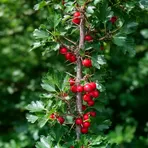
The English hawthorn produces clusters of bright red berries in late summer.
-
The English hawthorn blooms beautifully in spring.
-
In some regions, the English hawthorn has become naturalized outside its native range.
-
Many gardeners prefer English hawthorns for their hedges.
-
Gardeners often use English hawthorn to form dense, thorny hedges.
-
The English hawthorn produces clusters of bright red berries in late summer.
-
The English hawthorn blooms beautifully in spring.
Synonyms
 7
5.4
7
5.4

A small tree or bush with white spring flowers and red berries

A small thorny tree with groups of white flowers and red berries

A shrub or small tree with sharp thorns, white flowers, and red berries

A thorny bush or small tree with white flowers and red berries
Surface Forms
Morphology
The phrase denotes a type or variety of hawthorn associated with England, so its meaning is directly compositional from 'English' (pertaining to England) + 'hawthorn' (a shrub). Nationality/attribute + noun compounds naming plant varieties are cross-linguistically common and follow predictable patterns, so a B1 learner who knows both constituents will understand the MWE.
Etymology
English hawthorn likely comes from old words: haw, meaning 'hedge' or the small red 'berry', and thorn, meaning a sharp branch. People planted this spiky shrub to make thick, strong hedges, so the name points to a thorny 'hedge' plant.