

Elaeocarpus grandis
- noun
- Specialized
- Elaeocarpus grandis produces distinctive blue fruits that attract many local birds.
Examples
-
Carpenters value the wood of Elaeocarpus grandis for its strength and pale color.
-
The lush rainforest was dominated by tall Elaeocarpus grandis trees reaching towards the sunlight.
-
Wow! That Elaeocarpus grandis is stunning!
-
The Elaeocarpus grandis is known for its beautiful white flowers.
-
Elaeocarpus grandis produces distinctive blue fruits that attract many local birds.
-
Carpenters value the wood of Elaeocarpus grandis for its strength and pale color.
-
The lush rainforest was dominated by tall Elaeocarpus grandis trees reaching towards the sunlight.
Synonyms
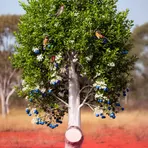
A tree from Australia with hard white wood, shiny green leaves, white flowers and bright blue fruit
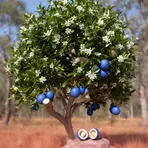
A tree from Australia with hard white wood, shiny green leaves, white flowers, and blue fruit with one seed
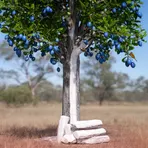
An Australian tree with hard white wood and small glossy blue fruit
Surface Forms
Morphology
Elaeocarpus + grandis
The form is a botanical binomial combining a genus name (Elaeocarpus = a tree genus) with a Latin epithet (grandis, conventionally meaning 'large'), so if a learner knew both constituents they could infer it denotes a particular (likely large) species of Elaeocarpus. However, the epithet is Latin and botanical names are technical, so the specific referent and features (Australian tree with glossy blue fruit) are not fully predictable to an average B1 learner without prior exposure.
Etymology
Elaeocarpus grandis comes from old words: elaeo- and -carpus mean 'olive' and 'fruit', and grandis means 'large'. So the name gives a simple picture of a 'large' tree with olive-like 'fruit', which fits this big tree with noticeable shiny fruits.

