
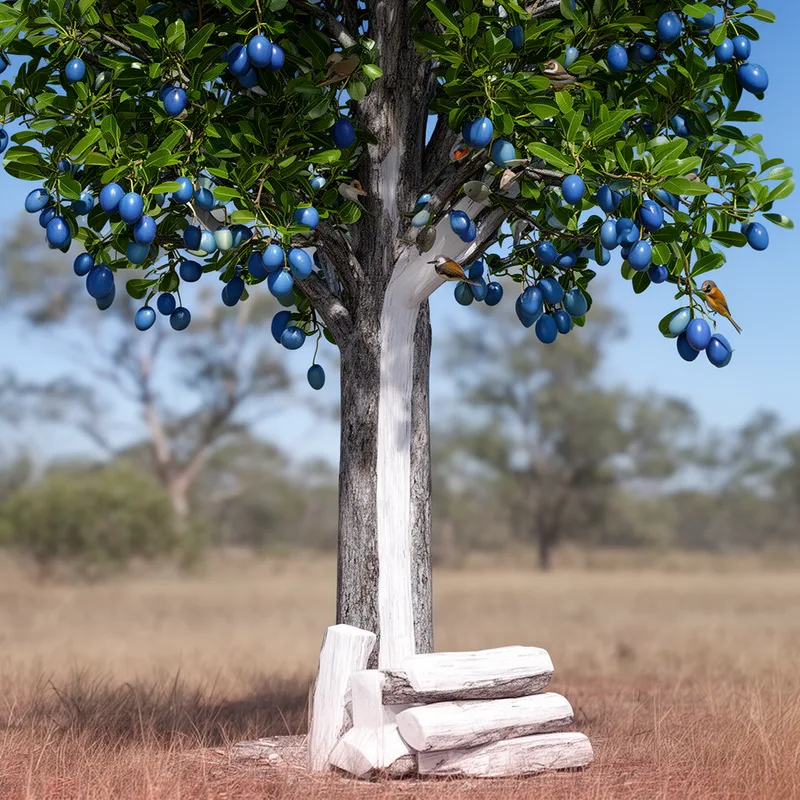
blue fig
- noun
- Australian
- The blue fig is valued for its attractive blue fruit and strong timber.
Examples
-
Several blue fig trees were planted along the nature reserve trail.
-
Birds are attracted to the blue fig when its bright fruit ripens in summer.
-
Many birds are attracted to the blue fig fruit.
-
The blue figs are ripe and ready for picking.
-
Birds are attracted to the blue fig when its bright fruit ripens in summer.
-
Several blue fig trees were planted along the nature reserve trail.
-
The blue fig is valued for its attractive blue fruit and strong timber.
Synonyms
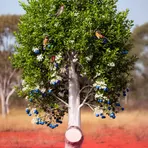
A tree from Australia with hard white wood, shiny green leaves, white flowers and bright blue fruit
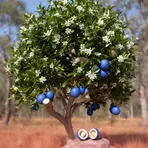
A tree from Australia with hard white wood, shiny green leaves, white flowers, and blue fruit with one seed

An Australian tree with strong pale wood, shiny green leaves, white flowers, and blue fruit
Surface Forms
Morphology
The noun phrase 'blue fig' is a straightforward adjective + noun composition: a fig (or fig-like fruit) that is blue in color, so a B1 learner who knows 'blue' and 'fig' can infer the referent. Botanical specifics (Brisbane quandong species) are incidental; the semantic composition follows a common, cross-linguistically transparent pattern.
Etymology
Blue fig comes from a simple picture: the plant makes shiny blue fruits that look like small figs. So people used blue fig to name the 'tree' that bears those blue fruits.

