
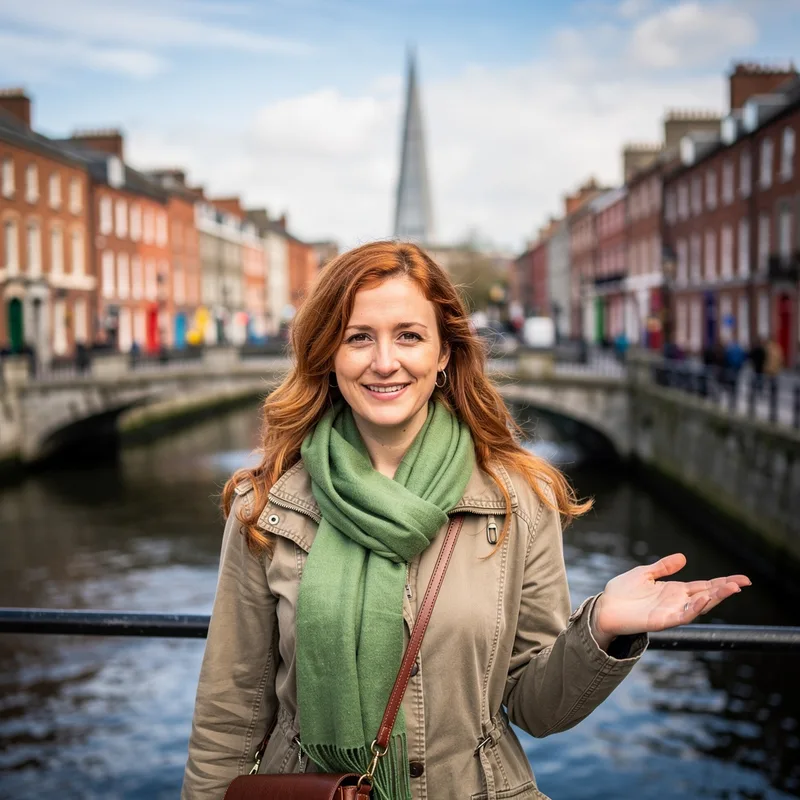
Dubliner
 1
3.8

- noun
- /ˈdʌblɪnər/
- Joyce's familiarity with etymology preceded the writing of Dubliners by several years.
- Dubliner stories
- title Dubliners
- James Joyce: Dubliners
Loading YouTube…
Watch on YouTubeI guess New Yorkers, Dubliners, Dub Dublish dubbies.
- I guess New Yorkers, Dubliners, Dub Dublish dubbies.
Examples
-
But here at the end of Dubliners, a woman's voice speaks unbidden.
Academic text (1991) -
There are 25,000 Dubliners serving in the British Army during the First World War.
-
Few as the manifestations of British presence in Dubliners are, they consistently underscore the inequality inscribed within the colonial relationship.
Academic text (1991) -
There are 960 instances of direct discourse in Dubliners: 707 by males, 243 by females, and 10 unmarked for gender.
Academic text (1991) -
A true Dubliner knows the best places to find traditional Irish music in the city.
-
As a lifelong Dubliner, she felt a special connection to the culture and history of her hometown.
-
Many Dubliners take pride in their friendly nature and vibrant community.
Synonyms
 71
1.0
People from Ireland or with family roots there


 1
1.0
A person from Ireland
Surface Forms
Morphology
Etymology
The word Dubliner comes from the city name Dublin, which itself comes from old Irish words dubh and linn meaning 'black pool', plus the English ending -er that means 'person from'. So, a Dubliner is someone who lives in or comes from Dublin.