
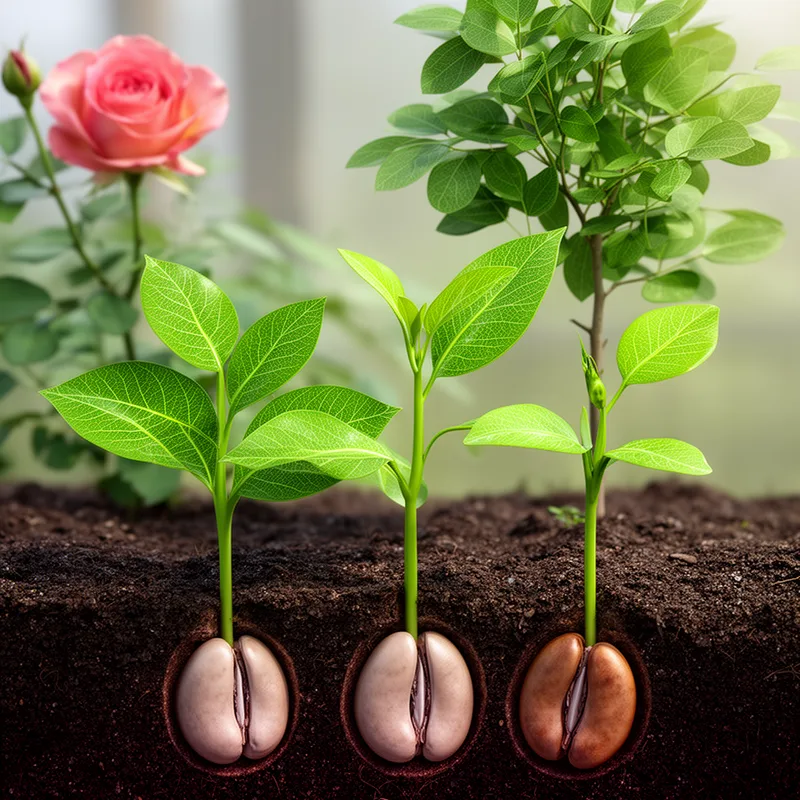
Dicotyledones
- noun
- /ˌdaɪkəˈtɪlɪˌdoʊniːz/
- Specialized
- Advances in plant genetics have led to new insights into the classification of Dicotyledones.
Examples
-
The Dicotyledones family includes many common plants.
-
Most trees and shrubs belong to the Dicotyledones, sharing characteristics like net-veined leaves.
-
The rose plant is classified among the Dicotyledones due to its two seed leaves.
-
Are sunflowers part of the Dicotyledones group?
-
Many fruits and vegetables come from Dicotyledones, such as apples and beans.
-
Gardeners often prefer Dicotyledones for their aesthetic appeal and diversity.
-
Some common examples of Dicotyledones include roses and sunflowers.
Synonyms


 1
9.9
1
9.9
A flowering plant with two seed leaves inside its seed
 1
9.1
1
9.1
A plant that makes flowers and whose seeds have two small leaves inside

A group of flowering plants with seeds that have two seed leaves, like roses or oak trees

A group of flowering plants with two seed leaves and net-like leaf veins, including many trees and shrubs
Surface Forms
Morphology
Dicotyledones = dicotyledon (semi-transparent) = di + cotyledon + es
The base 'dicotyledon' is analyzable as 'di-' + 'cotyledon', but 'cotyledon' is specialized botanical vocabulary that may be unknown to average learners.
Etymology
Dicotyledones comes from the parts di- meaning 'two' and cotyledon meaning 'seed leaf'. Think of a seed that opens with two little leaves inside; that's why Dicotyledones are the flowering plants whose seeds have two seed leaves.