
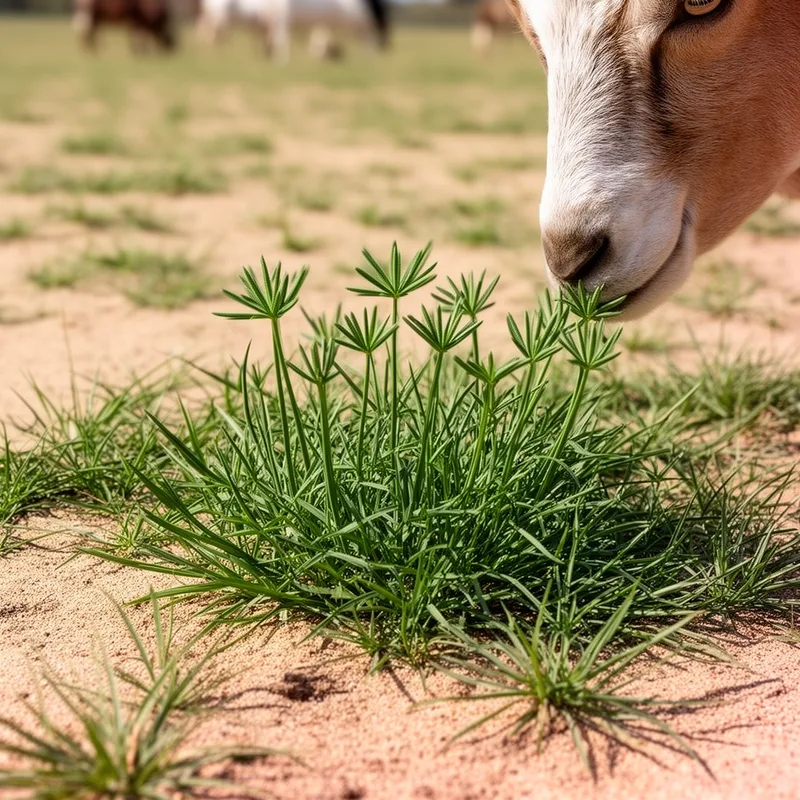
Dactyloctenium aegypticum
- noun
- Specialized
- The spikes of Dactyloctenium aegypticum resemble fingers spread out from a central point.
Examples
-
Dactyloctenium aegypticum is often used for erosion control.
-
Farmers sometimes cultivate Dactyloctenium aegypticum as forage for livestock.
-
Dactyloctenium aegypticum is often used as a ground cover in sandy soils.
-
Many gardeners appreciate Dactyloctenium aegypticum for its drought resistance.
-
Dactyloctenium aegypticum is a popular choice for landscaping due to its extensive ground cover capabilities.
-
In tropical areas, Dactyloctenium aegypticum thrives in sandy habitats and helps prevent soil erosion.
-
Gardeners often select Dactyloctenium aegypticum for its finger-like spikes that add unique texture to lawns.
Synonyms
A creeping grass with finger-like spikes used for grazing in dry places
A creeping grass with spiky heads like a bird's foot that often grows as a weed
Surface Forms
Morphology
Dactyloctenium + aegypticum
This is a Latin binomial taxonomic name (a genus + species epithet) functioning as a technical proper noun; its sense 'a species of creeping grass with finger-like spikes' is not transparently built from everyday English words. A B1 learner—especially given the missing dictionary entry for 'aegypticum' and the Latin/technical nature of such epithets—would not be able to derive the meaning from the constituents without domain-specific knowledge.
Etymology
Dactyloctenium aegypticum may get its name from Greek words for 'finger' because the part Dactyloctenium shows the grass's spikes spreading out like fingers from one point, and the part aegypticum points to 'Egypt'.

