

Egyptian grass
- noun
- We examined the unique, finger-like spikes of the Egyptian grass during our botany expedition.
Examples
-
The field was covered in thick, green Egyptian grass, providing excellent grazing for the cattle.
-
Farmers in arid regions often cultivate Egyptian grass for its drought resistance.
-
The garden is filled with Egyptian grass.
-
Many homeowners prefer Egyptian grasses for landscaping.
-
Farmers in arid regions often cultivate Egyptian grass for its drought resistance.
-
The field was covered in thick, green Egyptian grass, providing excellent grazing for the cattle.
-
We examined the unique, finger-like spikes of the Egyptian grass during our botany expedition.
Synonyms
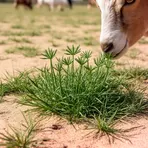
A low grass with finger-like spikes used as ground cover and animal feed
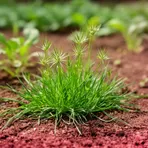
A creeping grass with spiky heads like a bird's foot that often grows as a weed

A coarse one-year grass that has long thin flower spikes and often grows as a weed
Surface Forms
Morphology
The phrase is a straightforward adjective + noun combination: 'Egyptian' (from Egypt) + 'grass' (a type of plant), so the meaning 'a type/variety of grass associated with Egypt or Egyptian characteristics' is directly derivable from the parts. This compositional pattern is common cross-linguistically and follows standard noun-modifier semantics, so a B1 learner knowing both words would understand it.
Etymology
Egyptian grass may come from farmers who found this low, spreading plant in fields along the Nile, so they used Egyptian to show where it grew and grass for the plant. So the name helps you remember a creeping plant 'from Egypt' with finger-like spikes.

