

DOS
 12
7.5
12
7.5

- noun
- /diː oʊ ɛs/
- Archaic
- Many businesses relied on DOS to run their applications in the 1980s and 1990s.
- MS-DOS
- PC DOS
- DOS computer
Examples
-
The machine control software runs from any DOS-based personal computer.
Academic text (1994) -
Autopipe 5.0 for Windows 3.1X, NT, 95, and DOS provides next-generation ease of use and analytical capabilities.
Academic text (1996) -
And here we are in a DOS emulator for Android.
-
The data on the flash card can be accessed through calls to DOS and BIOS.
Academic text (1995) -
The tests are designed to run in a PC AT-like computer using the Microsoft DOS operating system.
Academic text (1999) -
The IBM 4381 is running DOS/VSE as the operating system.
Academic text (2002) -
SCHEDULE requires a personal computer with MS-DOS capability and a minimum of 512k of memory.
Academic text (1991) -
Around the circumference of the room are carrels that contain 11 networked MS-DOS computers.
Academic text (1994) -
Ansys/Ed runs on DOS-based 80386 and 80486 PCs and costs $150.
Academic text (1995) -
INX6000 includes 4 MB of RAM, a 120-MB hard drive, a 3.5-in. floppy drive, DOS 5.0, and Windows 3.1.
Academic text (1995)
Synonyms
 1
6.7
1
6.7
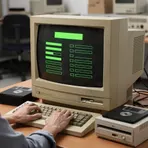
An old operating system made by Microsoft for early personal computers
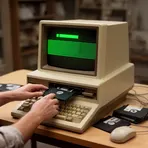
A basic system made by Microsoft that runs early personal computers

A program that runs from a disk to control a computer and its files
Compounds


A group of companies and research centers in the city that make planes and engines
Surface Forms
Morphology
DOS = D + O + S
This is an acronym/initialism (Disk Operating System); the individual letters do not convey the meaning to learners and the term is not transparently built from standalone English morphemes.
Etymology
DOS is short for Disk Operating System, which literally means a system that 'runs' from a 'disk', so DOS was the basic software that controlled early personal computers.