
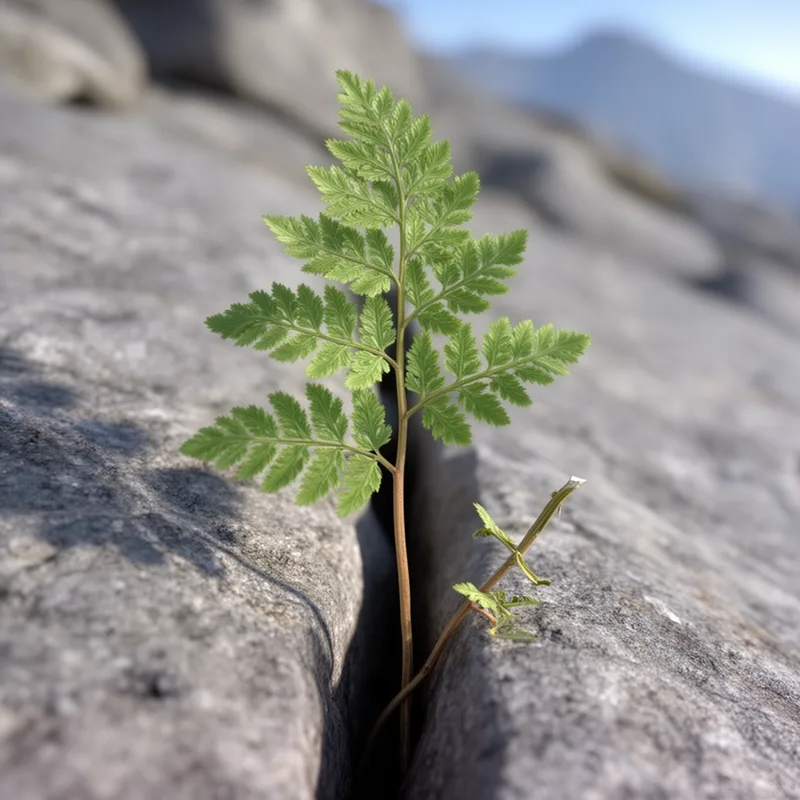
Cystopteris fragilis
- noun
- Specialized
- The fronds of Cystopteris fragilis are easily damaged because of their brittle stems.
Examples
-
Cystopteris fragilis often grows on rocky slopes at high elevations.
-
Cystopteris fragilis thrives in moist, shaded environments, often adding a lush touch to forest floors.
-
Botanists studied Cystopteris fragilis to understand its adaptation to different environments.
-
The Cystopteris fragilis is often found in shaded areas.
-
Many gardeners appreciate the beauty of Cystopteris fragilis.
-
The fronds of Cystopteris fragilis display a delicate beauty, making them a favorite among fern enthusiasts.
-
Gardeners often choose Cystopteris fragilis for its unique appearance and adaptability to cool, damp conditions.
Synonyms

A delicate fern with thin divided leaves and easily broken stems

A delicate fern with thin divided leaves and stems that break easily

A delicate plant with thin divided leaves and easily broken stems that grows in damp woods
Surface Forms
Morphology
Cystopteris + fragilis
This is a Latin binomial (scientific species name) and functions as a proper noun rather than a compositional English phrase. The constituent elements are not standard English vocabulary for a B1 learner (and 'fragilis' is Latin, not a common English form of 'fragile'), so the meaning 'a delicate fern species with brittle stems' cannot be reliably derived from the parts. Such taxonomic names are language-specific conventions and therefore unpredictable for learners.
Etymology
Cystopteris fragilis comes from old Greek and Latin words: Cystopteris means 'bladder fern' because the plant has small pouch-like covers under its leaves, and fragilis means 'fragile' for its brittle stems. So the name paints a simple picture of a delicate fern with tiny pouch-covers and easily broken stems, which helps you remember the plant.

