

Cystopteris
- noun
- /sɪsˈtɒp.tər.ɪs/
- Specialized
- The Cystopteris can often be found growing between rocks in shaded woodlands.
Examples
-
Several species of Cystopteris are known for their delicate, lacy fronds.
-
Botanists collected samples of Cystopteris to study its adaptations to rocky environments.
-
The Cystopteris thrives in rocky environments.
-
Many gardeners love Cystopteris for its unique appearance.
-
Many gardeners appreciate the beauty of Cystopteris, often using it to enhance their garden's shady areas.
-
In ancient stone formations, Cystopteris ferns gracefully sprout, showcasing their resilience in harsh environments.
-
During our hike, we spotted Cystopteris nestled among the rocks, thriving in the cool, damp shade.
Synonyms
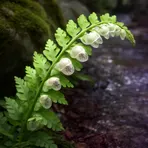
A fern with delicate leaves and a hood that covers its spore clusters
Compounds


- Specialized
A small delicate fern with thin divided leaves and brittle stems

Surface Forms
Etymology
The word Cystopteris comes from Greek parts cyst- meaning 'bladder' and -pteris meaning 'fern', so it literally means 'bladder fern'. Think of small bladder-like sacs or pouches on the fern's fronds or spore cases; that image helps you remember this name for the small ferns that often grow among rocks.

