
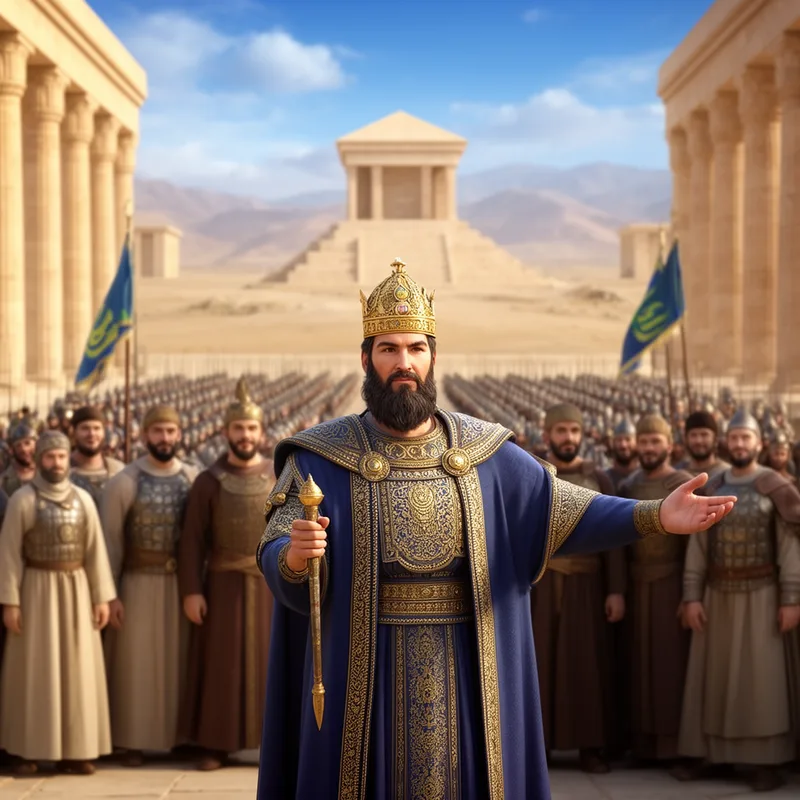
Cyrus the Elder
- proper noun
- Cyrus the Elder unified the Medes and Persians to create one of the largest empires of the ancient world.
Examples
-
Many historians regard Cyrus the Elder as a model ruler for his policy of tolerance toward conquered peoples.
-
The tomb of Cyrus the Elder is a UNESCO World Heritage site located in Pasargadae, Iran.
-
Did Cyrus the Elder establish the Persian Empire?
-
Cyrus the Elder was known for his tolerance of different cultures.
-
Cyrus the Elder founded the Persian Empire, which became known for its vast territory and cultural diversity.
-
Historians often describe Cyrus the Elder as a visionary leader who valued human rights in his empire.
-
The reign of Cyrus the Elder marked a significant period in history as he expanded Persia's influence across Asia.
Synonyms
 1
7.5

A king of Persia who founded the Persian Empire and ruled from about 600 to 529 BC
King of Persia around 600–529 BC who founded the Persian Empire
Surface Forms
Morphology
Cyrus + the + elder
The epithet 'the Elder' transparently indicates an older or senior person, so a learner who knows the name 'Cyrus' and the word 'elder' can infer it refers to an older/respected individual named Cyrus. However, the specific historical information that he was the King of Persia and the founder of the Persian Empire is not derivable from the constituents, so the phrase is only partially transparent.
Etymology
Cyrus the Elder got the name by adding the Elder to show he was the 'older' or first famous Cyrus and to tell him apart from later people with the same name. That's why the name reminds us he was an early Persian king who founded a large empire.