
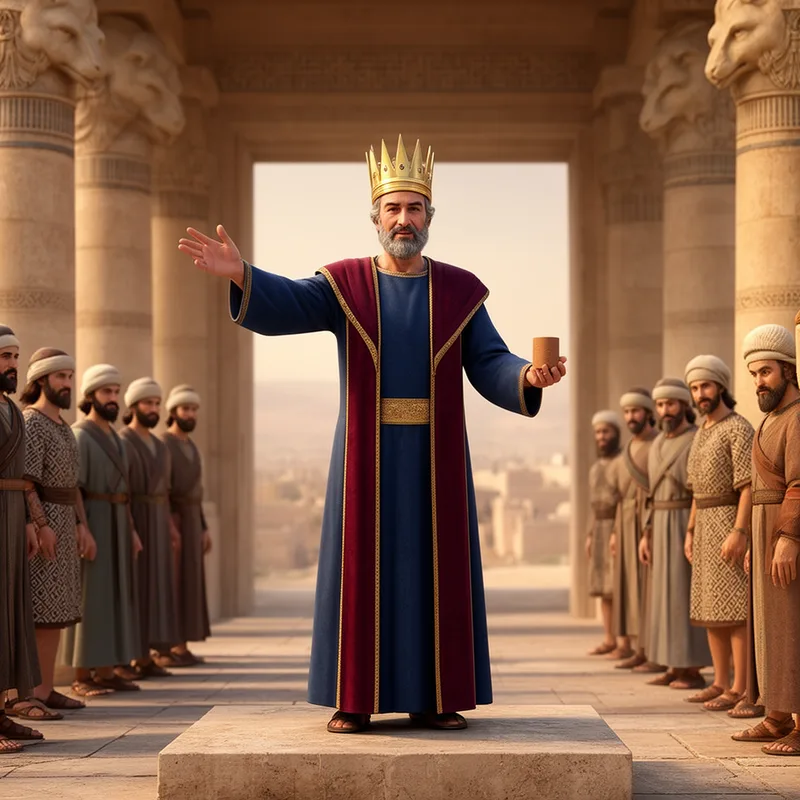
Cyrus II
- proper noun
- Cyrus II is credited with the unification of the Medes and Persians into a powerful empire.
Examples
-
Cyrus II is widely recognized as the founder of the Persian Empire, which he established by uniting the Medes and Persians.
-
Historians regard Cyrus II as a tolerant ruler who respected the customs and religions of the lands he conquered.
-
The reign of Cyrus II marked a turning point in the history of the ancient Near East.
-
The great Cyrus II was known for his military conquests.
-
Did Cyrus II really establish the Persian Empire?
-
Many ancient texts praise Cyrus II for his innovative methods of governance and respect for local traditions.
-
Cyrus II expanded his territory significantly, becoming one of the most notable figures of ancient history.
Synonyms

 1
7.5

A king of Persia who founded the Persian Empire and ruled from about 600 to 529 BC

King of Persia who founded the Persian Empire around 600–529 BC
Surface Forms
Morphology
Cyrus + II
This is a proper name plus a regnal numeral: knowing 'II' as 'the second' and recognizing 'Cyrus' as a name does not allow a B1 learner to derive the specific historical meaning (King of Persia, founder of the empire). At best a learner can infer 'Cyrus the Second' or that it names a person/monarch, but the detailed biographical and historical sense is not predictable from the parts alone.
Etymology
Cyrus II may come from an old Persian word meaning 'sun' or 'sun-like', so people pictured a ruler who shone over many lands. That's why the name fits a powerful 'king' who brought different peoples together.