
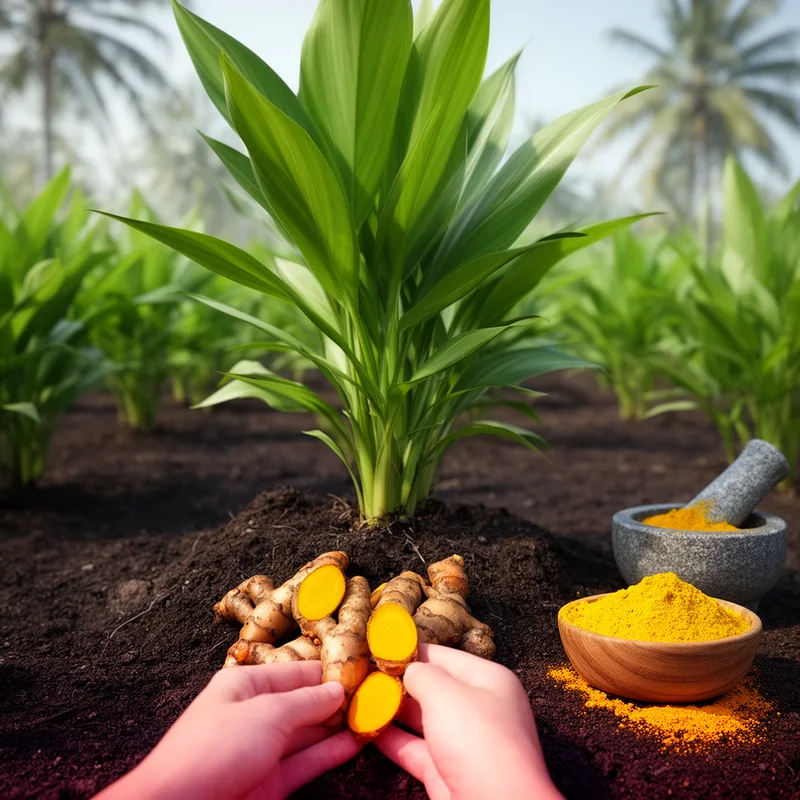
Curcuma longa
- noun
- /ˈkɜrkjʊmə ˈlɔŋɡə/
- Specialized
- Curcuma longa is cultivated extensively in India for its valuable rhizomes, which yield turmeric.
Examples
-
The roots of Curcuma longa are ground to produce the bright yellow spice used in cooking.
-
Many chefs use Curcuma longa to enhance the color of their dishes.
-
Scientists have studied the medicinal properties of Curcuma longa for centuries.
-
The Curcuma longa plant is known for its vibrant yellow flowers.
-
Curcuma longa is cultivated extensively in India for its valuable rhizomes, which yield turmeric.
-
The roots of Curcuma longa are ground to produce the bright yellow spice used in cooking.
-
Many chefs use Curcuma longa to enhance the color of their dishes.
Synonyms
 1
4.7
1
4.7

A tropical plant with yellow roots used for spice and dye

A tropical plant from India with a yellow root used as a spice and dye
Surface Forms
Morphology
This is a Latin binomial combining the genus name 'Curcuma' and the epithet 'longa', so a learner who knows both constituents could infer it denotes a particular species of Curcuma (i.e. a kind of turmeric plant). However, the specific cultural/usage sense (the primary source of turmeric and dye) and the taxonomic naming convention are not part of ordinary English composition and require prior exposure, so the relation is only partially predictable.
Etymology
Curcuma longa is the Latin name for the turmeric plant, and you can picture it as Curcuma plus longa—a plant with a long, bright yellow root. That yellow root is ground to make the cooking spice and 'yellow dye' called 'turmeric', so the name now means the plant we use for 'turmeric'.