
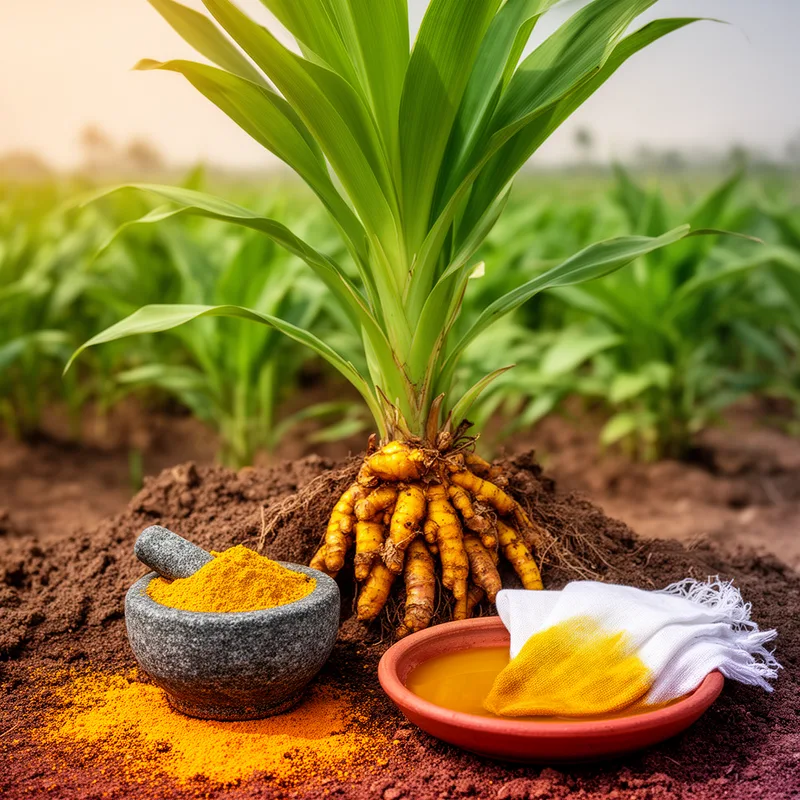
Curcuma domestica
- noun
- Specialized
- Curcuma domestica is prized for its rhizome, which is often ground into the spice turmeric.
Examples
-
Farmers in India have cultivated Curcuma domestica for centuries for its culinary and medicinal uses.
-
The yellow dye extracted from Curcuma domestica is traditionally used in fabrics and religious ceremonies.
-
The Curcuma domestica plant thrives in warm climates.
-
Many chefs use Curcuma domestica for its flavor.
-
Curcuma domestica is widely cultivated in India for its rhizome, which is the source of the spice turmeric.
-
The vibrant aroma of Curcuma domestica makes it a popular choice among chefs for adding flavor to various dishes.
-
In addition to culinary uses, the bright yellow rhizome of Curcuma domestica is also used to dye fabrics.
Synonyms
 1
4.7
1
4.7

A tropical plant with yellow roots used for spice and dye

A tropical plant with yellow roots used to make the spice turmeric
Surface Forms
Morphology
Curcuma + domestica
This is a taxonomic binomial that composes the genus name Curcuma with the epithet domestica, so a learner who knows Curcuma and the sense of 'domestic/domesticated' can infer it denotes a (cultivated/common) species of Curcuma. However, the full encyclopedic details in the definition (tropical origin, yellow rhizome used as turmeric) are not recoverable from the parts, and the Latin epithet 'domestica' may be unfamiliar to many B1 learners, so the relation is only partially transparent.
Etymology
Curcuma domestica is the Latin name for the turmeric plant. The part Curcuma comes from an old word for the yellow spice 'turmeric'. The part domestica means 'grown by people', so the name shows it is a plant people farm for the spice.