

Crotalus atrox
- noun
- /ˈkroʊtələs əˈtrɒks/
- Specialized
- The venom of the Crotalus atrox can be life-threatening if not treated promptly.
Examples
-
The Crotalus atrox is famous for its warning rattle that sounds when it feels threatened.
-
While hiking in Texas, we saw a Crotalus atrox coiled beneath a rock.
-
Crotalus atrox is often encountered by hikers in its native range.
-
Researchers captured a Crotalus atrox in the Arizona desert for study.
-
The Crotalus atrox is known for its distinctive diamond patterns.
-
Have you ever seen a Crotalus atrox in the wild?
-
A Crotalus atrox can deliver a potent venom that affects its prey quickly.
Synonyms
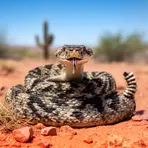
A large snake that has venom, a rattle, and diamond markings that lives in the US Southwest and Mexico

A large venomous rattlesnake with diamond-shaped marks on its back from the United States and Mexico
Surface Forms
Morphology
Crotalus + atrox
The term is a standard biological binomial: 'Crotalus' identifies the rattlesnake genus and the second element marks a specific species, so a learner who knows 'Crotalus' (rattlesnake) can infer this is a particular kind of rattlesnake. Taxonomic naming conventions are cross-linguistically regular, making the overall meaning (a species of rattlesnake) derivable from the constituents rather than idiomatic.
Etymology
Crotalus atrox comes from old words: Crotalus comes from a Greek word meaning 'rattle' and atrox is Latin for 'fierce' or 'terrible'. So, the name shows a dangerous rattlesnake that shakes a 'rattle' and can be deadly.

