

Crotalus
- noun
- /ˈkrōtələs/
- Specialized
- A Crotalus can deliver a potent venomous bite, though it rarely attacks unless threatened.
Examples
-
The Crotalus genus includes some of the most well-known rattlesnakes in North America.
-
The Crotalus is known for its distinctive rattle.
-
Herpetologists have studied Crotalus behavior to understand how these snakes adapt to different environments.
-
Have you ever seen a Crotalus in the wild?
-
The Crotalus snake can be recognized by its distinctive rattle, which warns predators nearby.
-
Biologists study the Crotalus species to understand their behavior and habitat preferences in the wild.
-
While hiking in the southwestern United States, I was cautious of any Crotalus I might encounter on the trail.
Synonyms

A group of large rattlesnakes found mainly in the Americas
Compounds

- Specialized
A large venomous rattlesnake from the southeastern United States with diamond-shaped markings, also called the eastern diamondback

- Specialized
A large venomous rattlesnake that lives in the southwestern United States and Mexico

- Specialized
A venomous type of rattlesnake that lives in eastern United States forests and rocky areas

- Specialized
A small rock rattlesnake that lives in Mexico and the southern United States
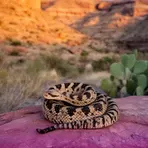
- Specialized
A rattlesnake with tiger-like bands found in dry hills and canyons of southern Arizona and Mexico

- Specialized
A venomous snake, the prairie rattlesnake, that lives in grasslands between the Mississippi River and the Rocky Mountains
Surface Forms
Etymology
Crotalus comes from the Greek krotalon, meaning 'rattle'. That's why this group of snakes is named for the noisy segmented tail they shake as a warning.

