
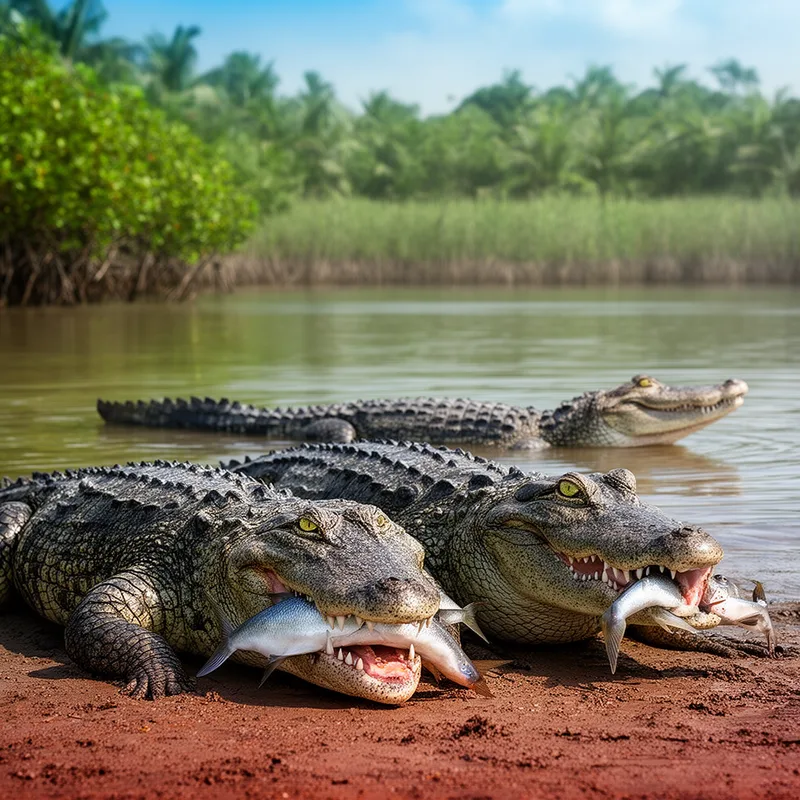
Crocodylidae
- noun
- /ˌkrɒkəˈdaɪliːdeɪ/
- Specialized
- The Crocodylidae family includes several species of true crocodiles.
Examples
-
The family Crocodylidae includes several species of true crocodiles, such as the Nile crocodile and the saltwater crocodile.
-
Unlike alligators, members of Crocodylidae generally have narrower, V-shaped snouts.
-
Paleontologists study fossil remains of Crocodylidae to learn about their evolution and adaptation.
-
Many species in the Crocodylidae family are found in Africa.
-
The family Crocodylidae contains various species that can grow to be over 20 feet long.
-
In tropical wetlands, Crocodylidae are often seen basking in the sun on riverbanks.
-
Conservation efforts are crucial for protecting the natural habitats of Crocodylidae worldwide.
Synonyms
A group of large reptiles that eat meat and live in rivers and swamps in warm countries
Compounds
- Specialized
A group of large reptiles that eat meat and live in rivers and swamps in warm countries
Surface Forms
Morphology
Etymology
Crocodylidae comes from crocodyl-, the same root as crocodile, from Greek krokodilos which people often explain as 'pebble' plus 'worm', together with the ending -idae, a common part meaning 'family of'. So Crocodylidae literally means the 'family of crocodiles', which helps you remember it refers to the true crocodile group.

