
Crataegus oxycantha
- noun
- Specialized
 :
Crataegus oxycantha
:
Crataegus oxycantha
- In eastern North America, Crataegus oxycantha has established itself as an ornamental species.
Examples
-
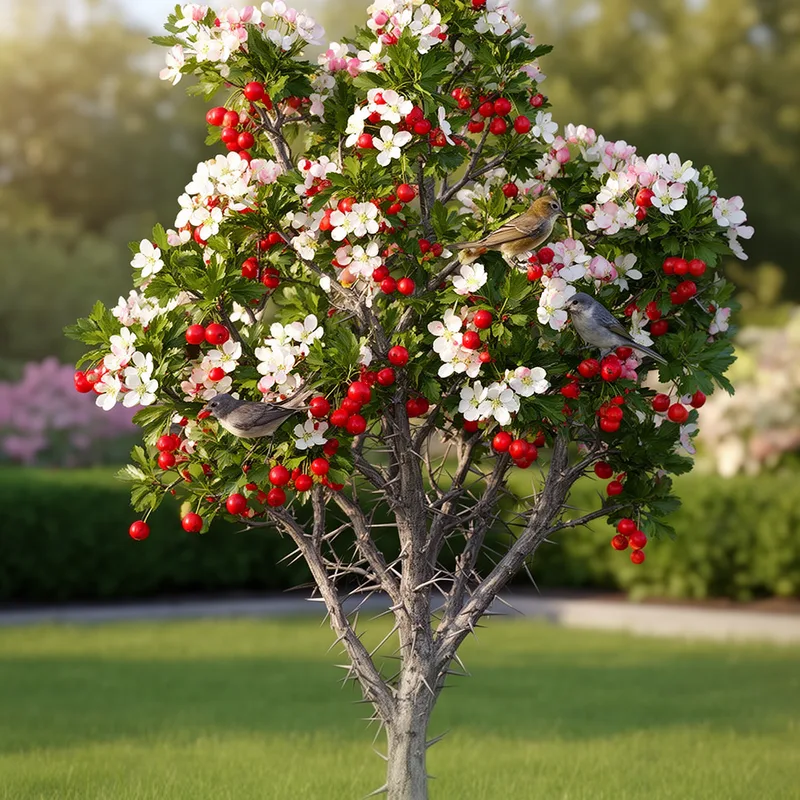
The bright red berries of Crataegus oxycantha attract many birds during autumn.
-
The garden in spring was alive with the blossoms of Crataegus oxycantha.
-
The Crataegus oxycantha blooms beautifully in spring.
-
Many gardeners love the Crataegus oxycantha for its flowers.
-
In eastern North America, Crataegus oxycantha has established itself as an ornamental species that beautifies gardens.
-
The bright red berries of Crataegus oxycantha attract many birds during autumn, making it a popular plant for wildlife enthusiasts.
-
The garden in spring was alive with the blossoms of Crataegus oxycantha, creating a stunning display of white and pink flowers.
Synonyms

A shrub or small tree with sharp thorns, white flowers, and red berries

A small thorny tree with groups of white flowers and red berries

A thorny shrub with white or red flowers and bright red berries used for hedges

A thorny bush or small tree with white flowers and red berries
Surface Forms
Morphology
Crataegus + oxycantha
This is a botanical Latin binomial (genus + species): 'Crataegus' clearly denotes the hawthorn genus, and the species epithet normally describes a property of that plant. If a learner actually knows 'oxycantha' (from Greek roots meaning 'sharp/pointed thorn') they can compositionally infer a thorny hawthorn, but 'oxycantha' is specialized/rare and not found in ordinary learner dictionaries, so the meaning is only partially predictable without knowledge of botanical or classical roots.
Etymology
Crataegus oxycantha comes from old Greek words that mean 'strong' and 'sharp thorn'. The part Crataegus shows the tree's hard wood and the part oxycantha shows its sharp thorns, so the name paints a picture of a small, tough tree covered in thorns.

