
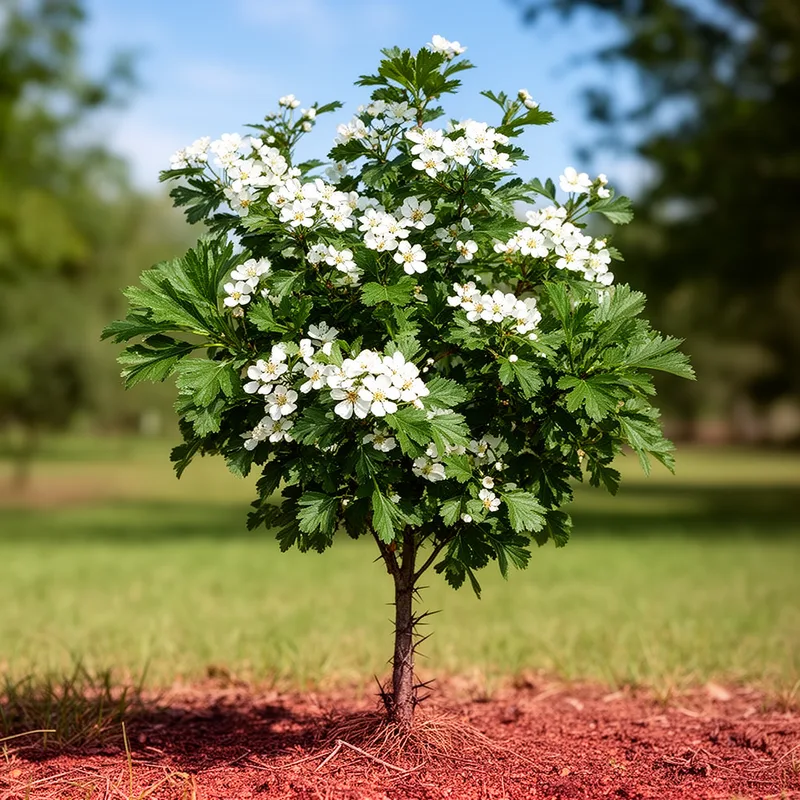
Crataegus marshallii
- noun
- Specialized
- The Crataegus marshallii is easily recognized by its deeply lobed leaves and small white flowers.
Examples
-
In southern gardens, Crataegus marshallii is valued for its ornamental appearance and resilience.
-
Botanists often study Crataegus marshallii to understand the diversity of North American hawthorns.
-
The Crataegus marshallii is often found in wetlands.
-
Many gardeners appreciate the Crataegus marshallii for its beauty.
-
Botanists often study Crataegus marshallii to understand the diversity of North American hawthorns.
-
In southern gardens, Crataegus marshallii is valued for its ornamental appearance and resilience.
-
The Crataegus marshallii is easily recognized by its deeply lobed leaves and small white flowers.
Synonyms

A small hawthorn tree from the southern United States with deeply lobed leaves

A small tree with leaves cut like parsley that makes red berries and grows in the southern United States

A small thorny tree or shrub from the southern United States with leaves like parsley
Surface Forms
Morphology
Crataegus + marshallii
This is a Latin scientific binomial: 'Crataegus' names the hawthorn genus but 'marshallii' is a Latinized proper name (honorific) rather than a descriptive word. Knowing the constituents therefore will not let a B1 learner infer the species-specific meaning (native range or leaf morphology), so the overall meaning is not derivable from the parts.
Etymology
Crataegus marshallii is a Latin plant name: Crataegus is the hawthorn group and the second word marshallii shows the species was 'named after' a person called Marshall. So the name simply means 'Marshall's hawthorn', which helps you remember it is a type of hawthorn with deeply lobed leaves.

