

Crataegus calpodendron
- noun
- Specialized
- Botanists admire the almost thornless branches of Crataegus calpodendron compared to other hawthorns.
Examples
-
The berries of Crataegus calpodendron are pear-shaped and turn reddish as they ripen.
-
The Crataegus calpodendron grows best in well-drained soils and sunny locations.
-
The Crataegus calpodendron is known for its beautiful fruit.
-
Many gardeners prefer the Crataegus calpodendron for its resilience.
-
The Crataegus calpodendron produces striking, pear-shaped berries that attract various birds.
-
In landscaping, many choose the Crataegus calpodendron for its upright form and low thorn presence.
-
The leaves of the Crataegus calpodendron provide excellent shade during the hot summer months.
Synonyms
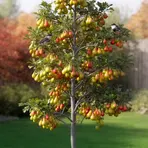
A North American tree or bush with few thorns and pear-shaped berries
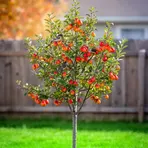
A small tree with few thorns that has pear-shaped berries

An American hawthorn tree with few thorns and small pear-shaped berries
Surface Forms
Morphology
Crataegus + calpodendron
This is a Latin binomial (genus + species); knowing 'Crataegus' (a genus of shrubs/hawthorns) lets a learner infer it names a particular kind of hawthorn, but the species epithet 'calpodendron' is not a known English word and gives no transparent information about the plant's specific traits. Because the taxonomic form yields partial but limited meaning (type-of relation clear, species details opaque), it is only partially predictable for a B1 learner.
Etymology
Crataegus calpodendron may come from old Greek words, with Crataegus meaning 'hard' (for the tree's strong wood) and calpodendron meaning 'pear-shaped tree' (for its pear-like berries). So the name helps you remember a hawthorn that has tough wood and pear-shaped fruit.

