
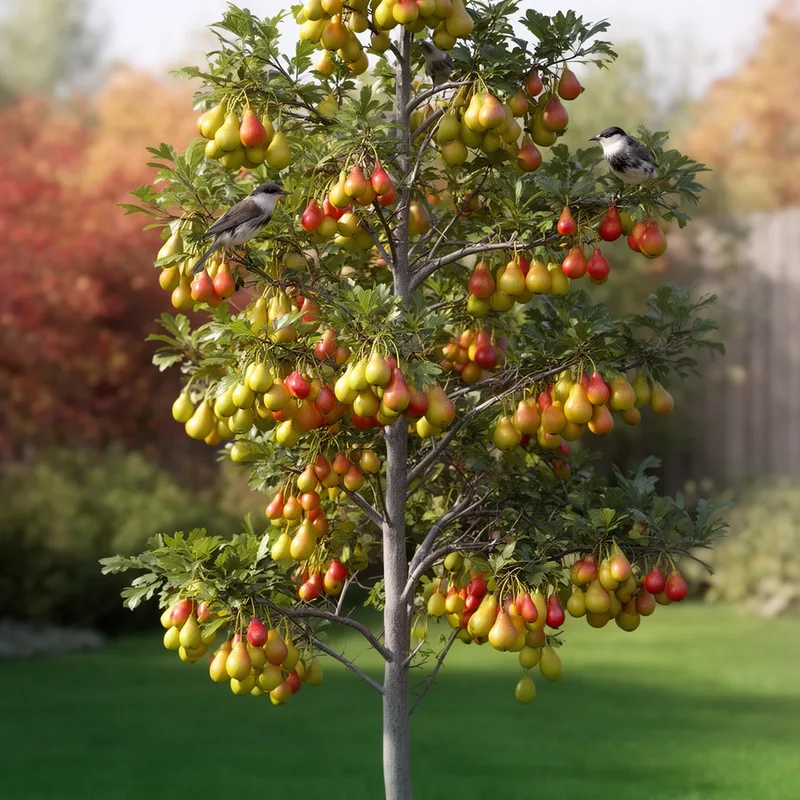
pear hawthorn
- noun
- /pɛr ˈhɔːθɔrn/
- US
- The pear hawthorn is known for its distinctive pear-shaped fruit.
Examples
-
Unlike other species, the pear hawthorn has very few thorns on its branches.
-
We planted a pear hawthorn in the garden to attract birds in autumn.
-
The pear hawthorn grows well in sunny areas.
-
Many pear hawthorns are found in the park.
-
The pear hawthorn is a popular choice among gardeners due to its attractive fruit and minimal thorns.
-
In spring, the pear hawthorn blooms with white flowers, making it a beautiful addition to any landscape.
-
Birds love to feed on the berries of the pear hawthorn during the fall season.
Synonyms

A North American hawthorn tree or shrub with upright branches, almost no thorns, and pear-shaped berries
A small tree with few thorns that has pear-shaped berries
A small American tree with upright branches, almost no thorns, and pear-shaped berries

An American hawthorn tree with few thorns and small pear-shaped berries
Surface Forms
Morphology
pear + hawthorn
The noun-noun compound 'pear hawthorn' transparently denotes a type of hawthorn associated with pears (i.e., a hawthorn with somewhat pear-shaped berries), so a B1 learner who knows 'pear' and 'hawthorn' can readily infer this description. This follows a common attributive compound pattern (modifier noun + head noun) that is cross-linguistically regular and therefore predictable.
Etymology
Pear hawthorn The name pear hawthorn comes from an American hawthorn whose small fruits look like tiny pears. It combines pear for the 'pear-shaped' fruit and hawthorn for the plant, so the name means that specific tree with pear-like berries and few thorns.

