
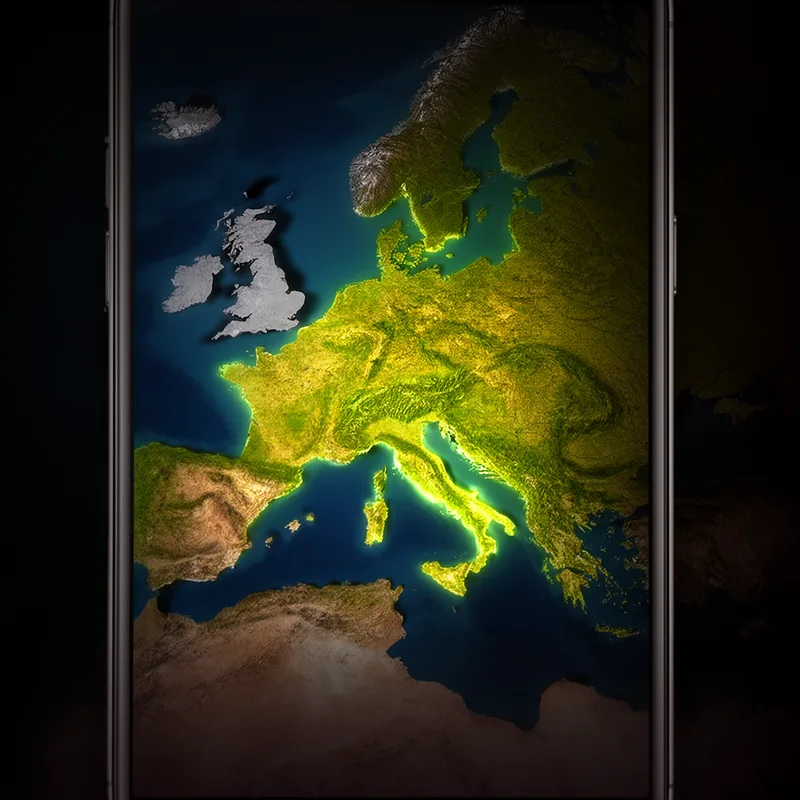
Continent
 48
6.0
48
6.0

- noun
- /ˈkɒntɪnənt/
- UK
- "For the first time, the American continent had been entirely spanned," from sea to shining sea.
- the Continent of Europe
- nations on the Continent
- power on the Continent
Loading YouTube…
Watch on YouTubeIt's a tiny little island in a cold, rainy part of the ocean just north of the European continent that conquered and civilized the entire world.
- It's a tiny little island in a cold, rainy part of the ocean just north of the European continent that conquered and civilized the entire world.
Examples
-
Newly returned from my tour of the continent.
-
In 1845, a potato blight crosses the continent of Europe.
-
We are glad of your return from the continent.
-
Yet it remains the largest military power on the continent, with tens of thousands of nuclear weapons.
Academic text (1991) -
So far, their remains have been found on every continent except Antarctica.
Academic text (1991) -
The question burns in my head as we sweep across the continent, flying over foretold as much as untold human tragedy.
Academic text (2008) -
The reason why the E.U. came into being was to protect our continent from further wars.
-
As a girl, you made a trip to the continent against your family's wishes.
-
We are glad of your return from the continent.
Synonyms
 ∞
1.0
∞
1.0
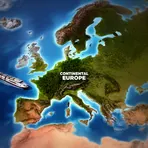
A continent of many countries between the Atlantic Ocean and Asia, and the countries there seen together
 92
2.7
92
2.7
The main area of land in a country or continent, not the islands

 1
3.4
1
3.4
Mainland Europe without its islands such as the British Isles
Compounds

Surface Forms
Etymology
Continent comes from a Latin word that means 'to hold together' and is the same root as continue. So a continent is a large, 'continuous' piece of land that 'holds together', which is why people in Britain often call mainland Europe 'the Continent'.