
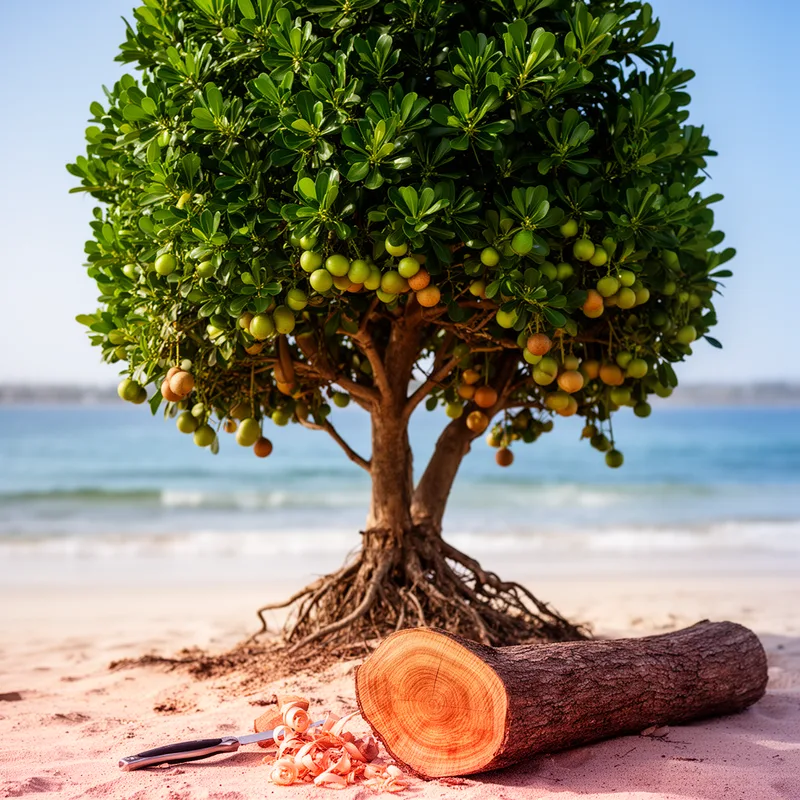
Conocarpus erectus
- noun
- Specialized
- The leaves of Conocarpus erectus remain green year-round in warm climates.
Examples
-
Local artisans often use the dense wood of Conocarpus erectus for carving and construction.
-
The roots of the Conocarpus erectus stabilize coastal soils and protect against erosion.
-
The Conocarpus erectus thrives in coastal environments.
-
Many gardeners prefer Conocarpus erectus for its resilience.
-
Local artisans often use the dense wood of Conocarpus erectus for carving and construction.
-
The roots of the Conocarpus erectus stabilize coastal soils and protect against erosion.
-
The leaves of Conocarpus erectus remain green year-round in warm climates.
Synonyms

An evergreen tree or bush with small round fruit and very hard wood
An evergreen tree or shrub with small round fruit like buttons and hard wood
A tropical coastal tree like buttonwood that grows in mangrove areas
Surface Forms
Morphology
Conocarpus + erectus
This is a Latin binomial (scientific) name rather than a normal English phrase; the genus name 'Conocarpus' is an obscure taxonomic label and 'erectus' is a Latin epithet (not a common English word). A B1 learner who knows basic English vocabulary would not be able to derive the botanical meaning 'buttonwood tree' from these constituents, so the form is essentially non-compositional for typical learners.
Etymology
The plant name Conocarpus erectus comes from old scientific words: cono- ('cone'), -carpus ('fruit') and erectus ('upright'). This describes the tree's cone-like, button-shaped fruit clusters and upright growth, so the name helps you picture the plant.

