
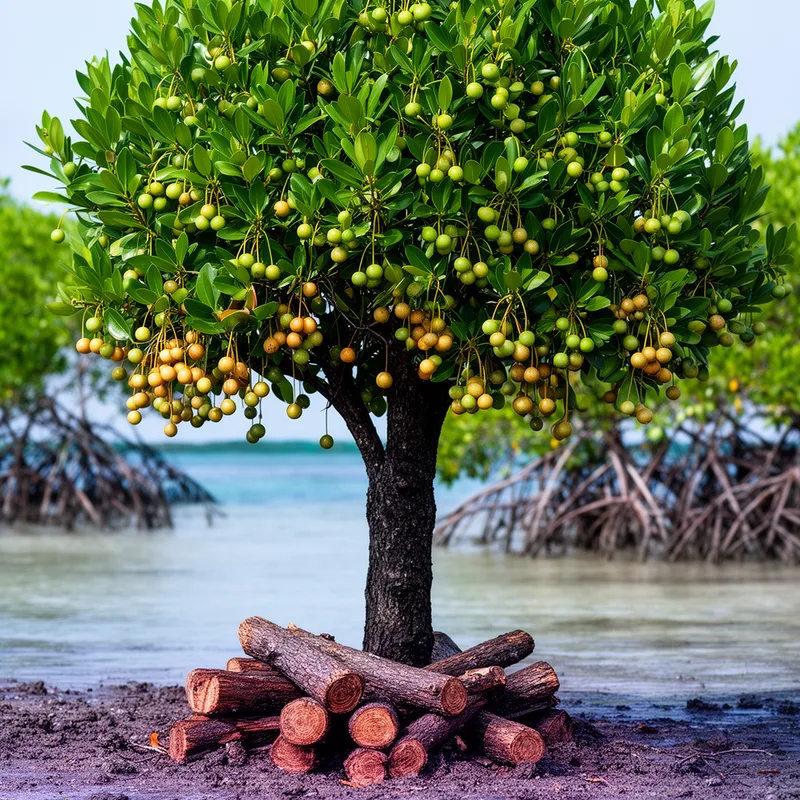
button mangrove
- noun
- US
- The button mangrove is commonly found in tidal swamps along tropical coasts.
Examples
-
The distinctive round fruit of the button mangrove attracts many birds and marine animals.
-
Local communities use wood from the button mangrove for making tools and crafts.
-
The button mangrove grows along the coast.
-
Button mangroves provide shelter for various marine species.
-
The button mangrove produces round, button-like fruit that is essential to the local ecosystem.
-
Many fish and birds depend on the button mangrove for food and shelter in coastal areas.
-
In coastal regions, the hard wood from the button mangrove is valued for its durability and strength.
Synonyms
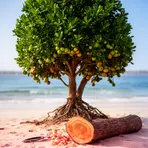
A tree or shrub that stays green all year with round fruit and hard dense wood

An evergreen tree or bush with small round fruit and very hard wood
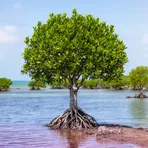
A tropical coastal tree like buttonwood that grows in mangrove areas
Surface Forms
Morphology
The compound is a straightforward modifier+head noun: it denotes a type of mangrove characterized by button-like fruits or structures, so the overall meaning is directly derivable from 'button' (button-shaped) + 'mangrove' (coastal tree). This compositional pattern is common and cross-linguistically transparent, so a B1 learner who knows both constituents would readily infer the MWE's meaning.
Etymology
Button mangrove gets its name from the tree's small, round fruits that look like buttons among the tangled roots of the mangrove swamp. That's why the name refers to an evergreen coastal tree with button-like fruit and very hard wood people use for 'tools and crafts'.

