
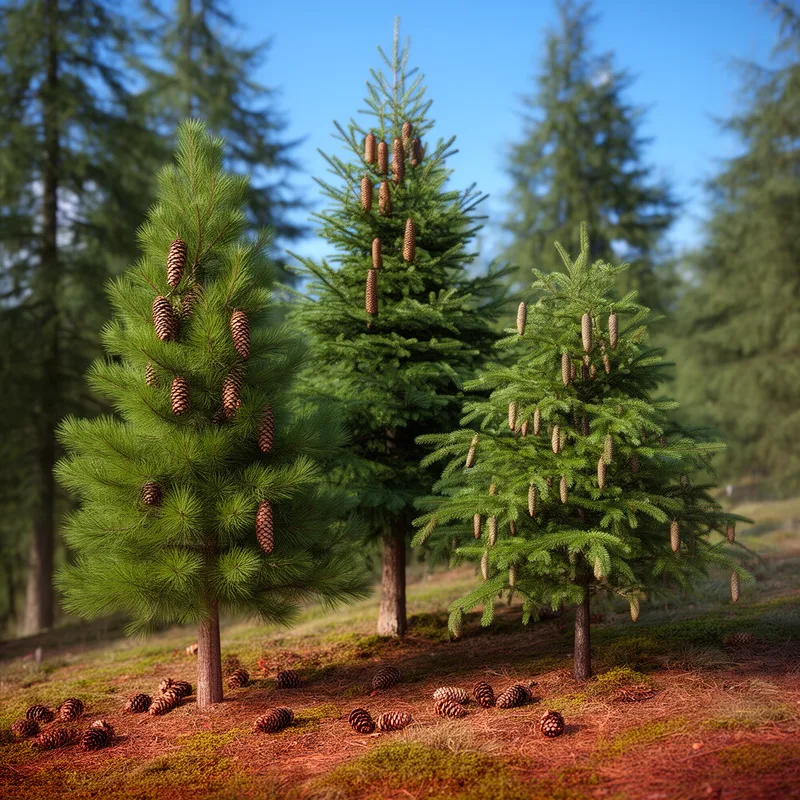
Coniferopsida
- noun
- /ˌkɒnɪˈfɛrəpsɪdə/
- Specialized
- Modern pine trees belong to the class Coniferopsida.
Examples
-
The Coniferopsida class includes many well-known trees.
-
The fossil record provides evidence of Coniferopsida flourishing during the Carboniferous period.
-
Some extinct orders in Coniferopsida have been identified from well-preserved plant fossils.
-
Many species in the Coniferopsida are adapted to cold climates.
-
Modern pine trees belong to the class Coniferopsida.
-
Many species in the Coniferopsida are adapted to cold climates.
-
Some extinct orders in Coniferopsida have been identified from well-preserved plant fossils.
Synonyms
A group of plants that make cones, like pines and spruces
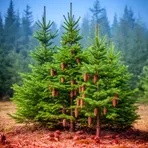
A group of cone-bearing plants like pines and firs
Surface Forms
Morphology
Etymology
Coniferopsida comes from conifer, which means 'cone-bearing' and is the same word we use for cone trees like pines, plus the scientific ending -opsida, which means 'a class' or group of plants. So, Coniferopsida is the class or group of cone-bearing plants.

