

Condylura cristata
- noun
- /kɒnˈdɪljʊrə krɪˈsteɪtə/
- Specialized
- The Condylura cristata is easily recognized by the star-shaped appendages on its snout.
Examples
-
The Condylura cristata is known for its unique star-shaped nose.
-
Biologists studied the unique sensory abilities of the Condylura cristata in swampy areas.
-
A Condylura cristata can detect and eat prey with remarkable speed.
-
Many people have never seen a Condylura cristata in the wild.
-
The Condylura cristata uses its star-shaped nose to sense vibrations in the water.
-
In northeastern wetlands, the Condylura cristata forages for insects and worms.
-
The Condylura cristata is often found burrowing in soft, moist soil near ponds.
Synonyms

A small North American mole that lives in wet ground with a pink nose of many tentacles to find food
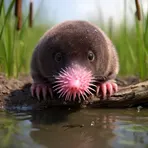
A small mole found in eastern North America that lives in water and has many pink tentacles on its nose
Surface Forms
Morphology
Condylura + cristata
The genus name Condylura is explicitly defined as a group of moles with star-shaped snouts, so a learner who knows that constituent can infer that Condylura cristata refers to a species of that mole and expect the star-nosed characteristic. However, the species epithet 'cristata' is a Latin form not glossed here and would not be transparent to a B1 learner, so the full meaning is only partly predictable from the parts.
Etymology
The noun Condylura cristata names a small mole with pink, finger-like tentacles around its nose that form a little star. That clear picture explains why people call it the 'star-nosed mole' and helps you remember this species.

