
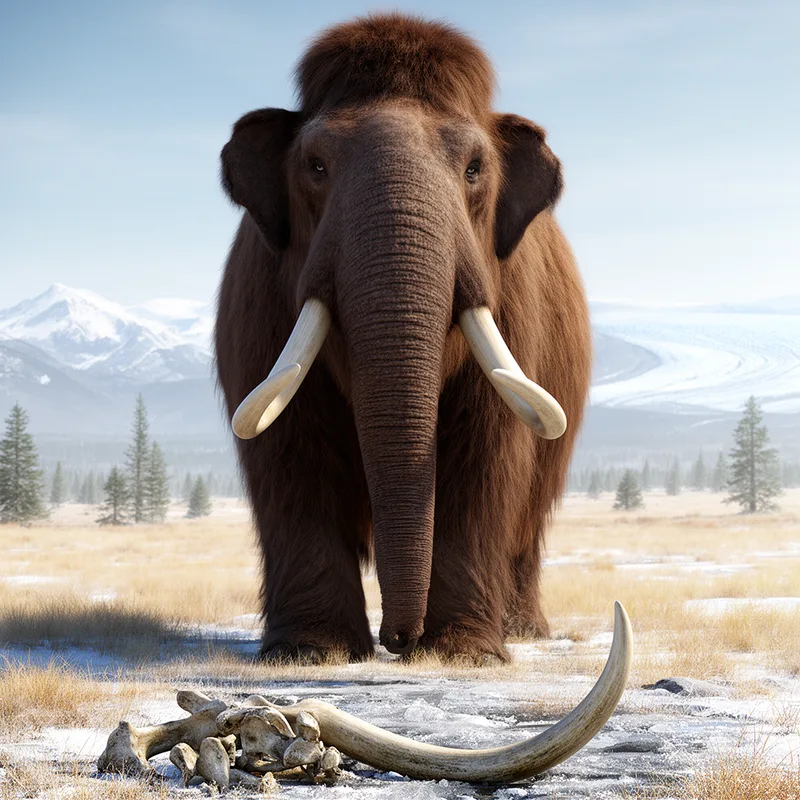
Columbian mammoth
- noun
- /kəˈlʌmbiən ˈmæməθ/
- Specialized
- The Columbian mammoth roamed the plains of North America.
Examples
-
Scientists study the bones of the Columbian mammoth to learn about prehistoric environments.
-
The Columbian mammoth was one of the largest mammals to roam the ancient plains.
-
Fossils of the Columbian mammoth have been discovered in several parts of North America.
-
Many fossils of the Columbian mammoth have been discovered.
-
Columbian mammoths were among the largest Columbian mammoths to inhabit North America during the Pleistocene epoch.
-
Scientists have discovered well-preserved Columbian mammoth remains in various locations across the United States.
-
Fossils of Columbian mammoths indicate they lived in diverse environments, from grasslands to forests.
Synonyms
 47
5.5
47
5.5

A very large, hairy elephant that lived long ago with curved tusks

A very large extinct elephant-like animal that lived in North America during the ice age
Surface Forms
Morphology
Columbian + mammoth
This is a straightforward adjective + noun composition: 'mammoth' is a prehistoric elephant and 'Columbian' indicates a geographic or type label, so a B1 learner who knows both words can infer it refers to a mammoth associated with a place or group called 'Columbia/Columbian'. The meaning is compositional and follows common cross-linguistic patterns for naming species or varieties, so it is directly understandable from the parts.
Etymology
Columbian mammoth: The name Columbian comes from 'Columbia', an old name for parts of North America and for the explorer Christopher Columbus, so the name points to the region where these animals were found. That's why Columbian mammoth means the large, now 'extinct' mammoth that once lived in North America.