
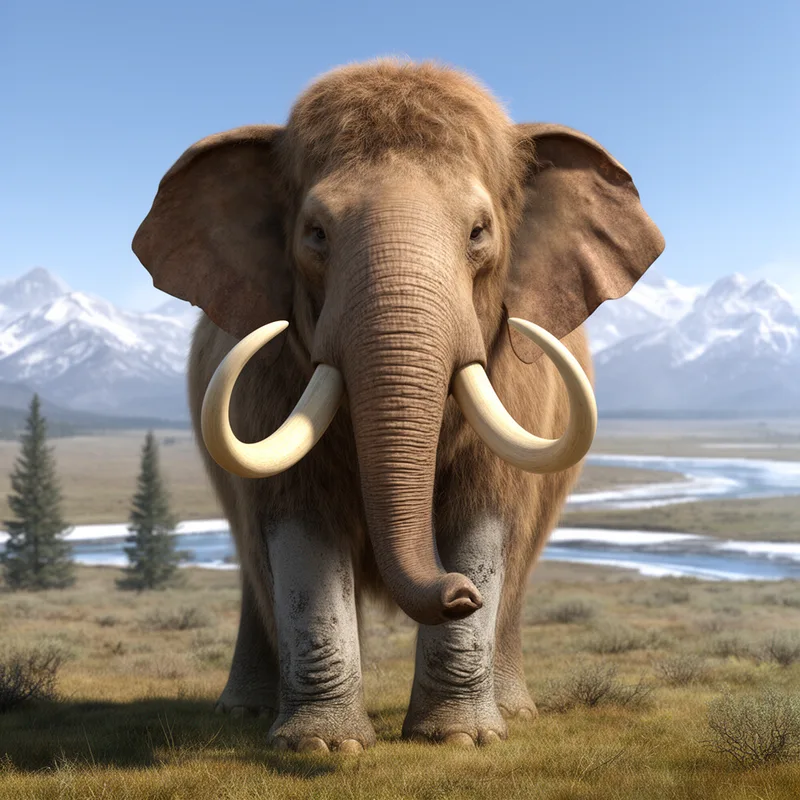
Mammuthus columbi
- noun
- /ˈmæməθəs kəˈlʌmbaɪ/
- Specialized
- Unlike the woolly mammoth, the Mammuthus columbi was adapted to warmer environments.
Examples
-
Fossils of the Mammuthus columbi have been found throughout much of North America.
-
The enormous tusks of Mammuthus columbi made it a subject of fascination for paleontologists.
-
The Mammuthus columbi roamed the plains of North America.
-
Did you know that the Mammuthus columbi was much larger than modern elephants?
-
Fossils of the Mammuthus columbi have been found throughout much of North America.
-
The enormous tusks of Mammuthus columbi made it a subject of fascination for paleontologists.
-
Unlike the woolly mammoth, the Mammuthus columbi was adapted to warmer environments.
Synonyms

An extinct very large elephant-like animal that lived in North America during the Ice Age
Surface Forms
Morphology
Mammuthus + columbi
This is a Latin taxonomic binomial composed of the genus name Mammuthus and the species epithet columbi, so a learner who knows those constituents can infer it denotes a particular species of Mammuthus (the Columbian mammoth). Taxonomic naming is a regular, compositional pattern used across languages, so the meaning is directly derivable from the parts rather than idiomatic.
Etymology
Mammuthus columbi is the scientific name for a large North American mammoth. The name mixes Mammuthus, an old word for mammoth, and columbi, a Latin form pointing to 'Columbus' or 'Columbia', so it reminds us that this mammoth lived in the Americas.

