
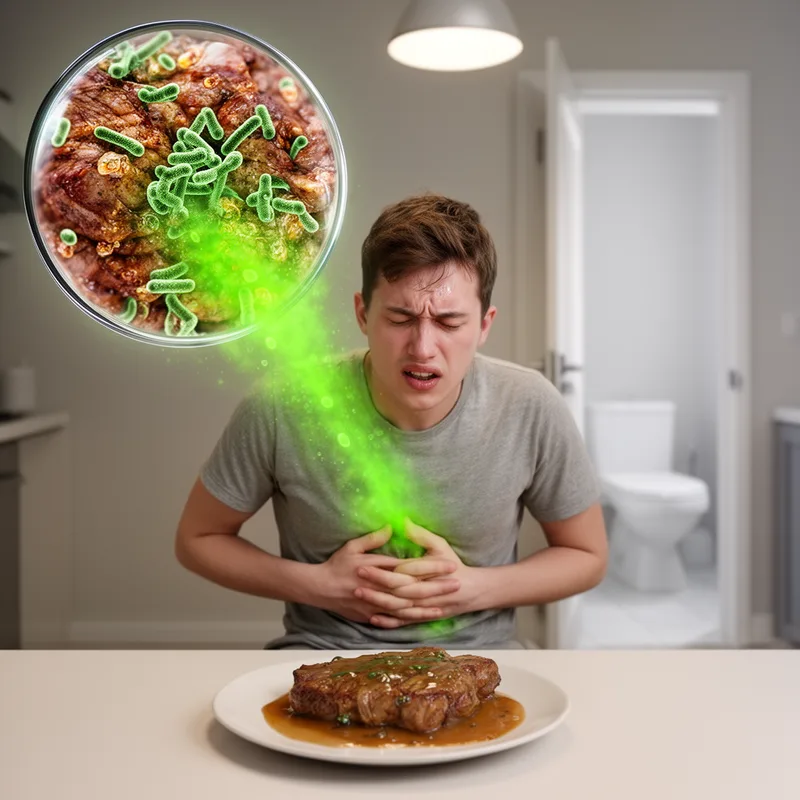
Clostridium perfringens epsilon toxin
- noun
- /klɒsˈtrɪdiəm pərˈfrɪndʒənz ˈɛpsɪlɒn ˈtɒksɪn/
- Specialized
- Food poisoning caused by Clostridium perfringens epsilon toxin can result in severe diarrhea and abdominal pain.
Examples
-
Scientists are studying how Clostridium perfringens epsilon toxin affects the intestines of animals and humans.
-
Many foodborne illnesses are linked to Clostridium perfringens epsilon toxin.
-
After the outbreak, tests confirmed the presence of Clostridium perfringens epsilon toxin in several food samples.
-
The Clostridium perfringens epsilon toxin can be severe.
-
Food poisoning caused by Clostridium perfringens epsilon toxin can result in severe diarrhea and abdominal pain.
-
After the outbreak, tests confirmed the presence of Clostridium perfringens epsilon toxin in several food samples.
-
Many foodborne illnesses are linked to Clostridium perfringens epsilon toxin.
Synonyms
A bacterial poison that causes severe stomach pain and diarrhea after eating contaminated food
Surface Forms
Morphology
clostridium + perfringens + epsilon + toxin
The phrase is compositionally built: 'toxin' (toxic substance) produced by the bacterium named 'Clostridium perfringens', with 'epsilon' marking a specific subtype; a learner who knows these constituents can infer it is a bacterial toxin of the epsilon type. However, 'perfringens' is a Latin species epithet and 'epsilon' functions as a technical subtype label that carry little everyday meaning for a B1 learner, so the full clinical implications remain only partially predictable.
Etymology
Clostridium perfringens epsilon toxin is named for the bacterium that makes it: the microbe Clostridium perfringens produces a harmful protein called a toxin, and epsilon (a Greek letter) marks this particular 'type'. So the name tells you it is a dangerous substance from that bacterium that can cause severe diarrhea and belly cramps when contaminated food is eaten.

