
Clostridium perfringens
- noun
- /klɒsˈtrɪdiəm pərˈfrɪndʒənz/
- Specialized
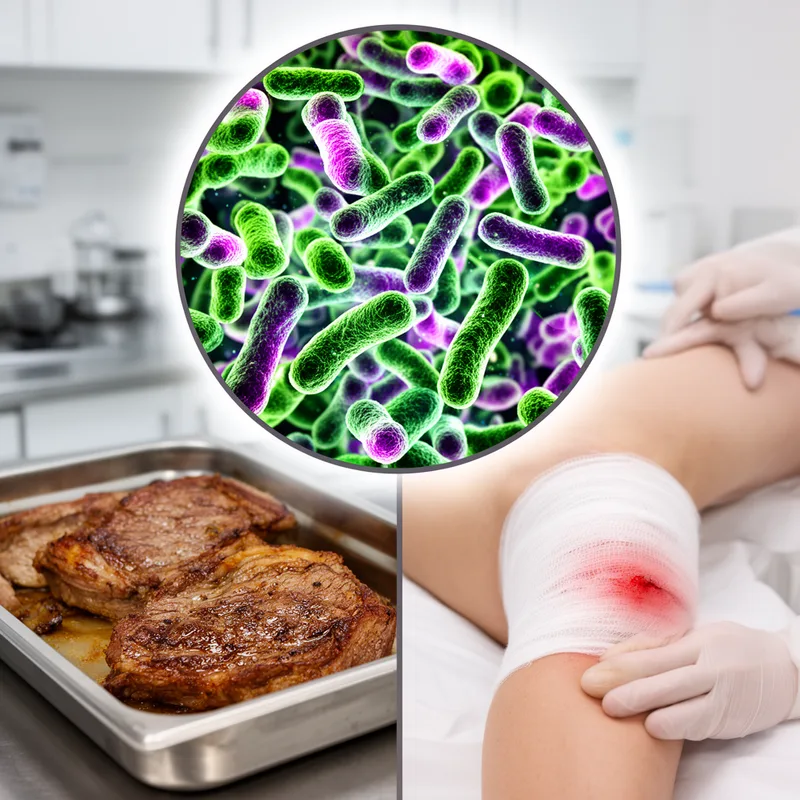
- Clostridium perfringens is a common cause of food poisoning in improperly stored cooked meats.
Examples
-
Doctors found Clostridium perfringens in the contaminated wound, which explained the rapid onset of gas gangrene.
-
Strict kitchen hygiene helps prevent outbreaks of illness due to Clostridium perfringens.
-
The bacterium Clostridium perfringens is known for causing food poisoning.
-
Inadequate cooking can lead to Clostridium perfringens contamination.
-
Clostridium perfringens can multiply quickly in foods that are not kept at safe temperatures, leading to severe illness.
-
Eating food contaminated with Clostridium perfringens can result in symptoms like diarrhea and stomach cramps.
-
Properly refrigerating leftovers is essential to prevent Clostridium perfringens from causing foodborne illnesses.
Surface Forms
Morphology
clostridium + perfringens
This is a Linnaean binomial: knowing 'Clostridium' signals a genus of bacteria so a learner could infer it names a bacterium, but the species epithet 'perfringens' is a Latin label (not a common English word) and does not transparently convey the toxin-producing or disease-causing properties. Therefore the taxonomic composition gives partial information (it is a bacterium) but not the full clinical meaning, making the expression only partially predictable.
Etymology
Clostridium perfringens gets its name from two old words: Clostridium refers to its long, tube-like shape and perfringens comes from Latin meaning 'to break through'. That's why the 'break through' part helps you remember that this germ makes poisons that destroy body tissue and can cause fast, serious infections.

