
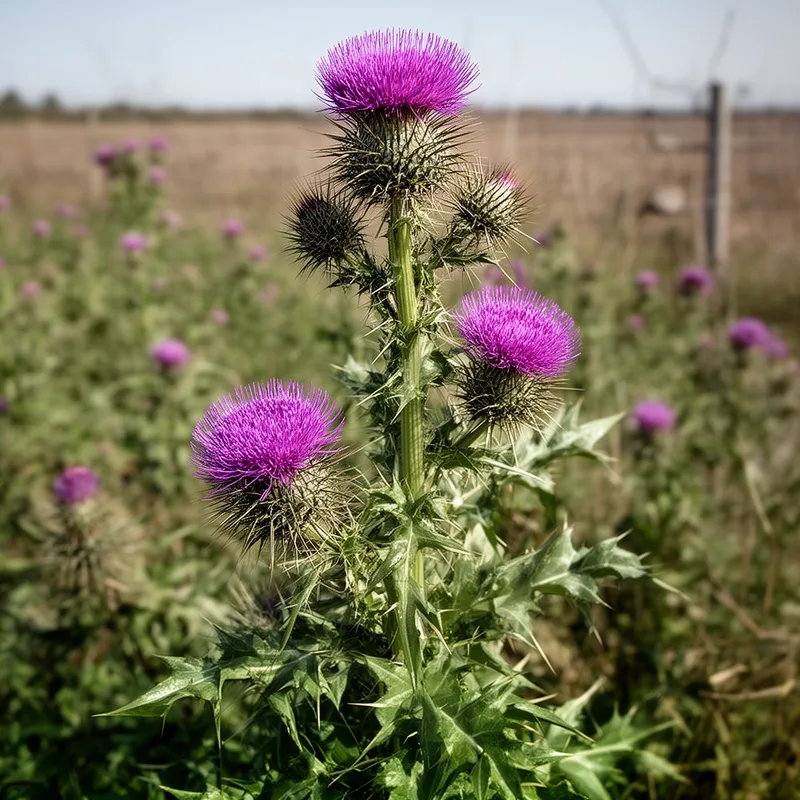
Cirsium vulgare
- noun
- Specialized
- The field was covered with the prickly growth of Cirsium vulgare in late summer.
Examples
-
Gardeners often struggle to remove Cirsium vulgare from their plots due to its resilience.
-
Cirsium vulgare is considered an invasive weed in many parts of the United States.
-
The Cirsium vulgare is often found in fields and roadsides.
-
Many gardeners consider Cirsium vulgare a troublesome weed.
-
Cirsium vulgare is often referred to as a noxious weed due to its rapid spread in gardens and fields.
-
In North America, Cirsium vulgare can dominate natural landscapes if not regularly controlled.
-
Cirsium vulgare typically flowers in midsummer, attracting bees and other pollinators despite being a weed.
Synonyms

A tall thistle with large flower heads and sharp spines that grows wild as a weed

A tall prickly plant with large purple flower heads often found as a weed
A plant from Europe with large prickly flower heads that grows as a weed
Surface Forms
Morphology
Cirsium + vulgare
This is a Latin binomial combining a genus name (Cirsium, a type of thistle) with a species epithet; the meaning is compositionally a particular kind of thistle but relies on scientific naming conventions and knowledge of the Latin epithet. Because the second element ('vulgare') is not an everyday English word and the form does not follow normal English compounding, a B1 learner would not fully predict its referential status from the parts without specialist or cross-linguistic knowledge.
Etymology
The plant Cirsium vulgare gets its name from old Greek and Latin. Cirsium may come from a Greek word meaning 'swollen vein' because people once used thistles to treat vein problems, and vulgare is Latin for 'common', so the name means 'common thistle' and fits this widespread prickly weed.

