
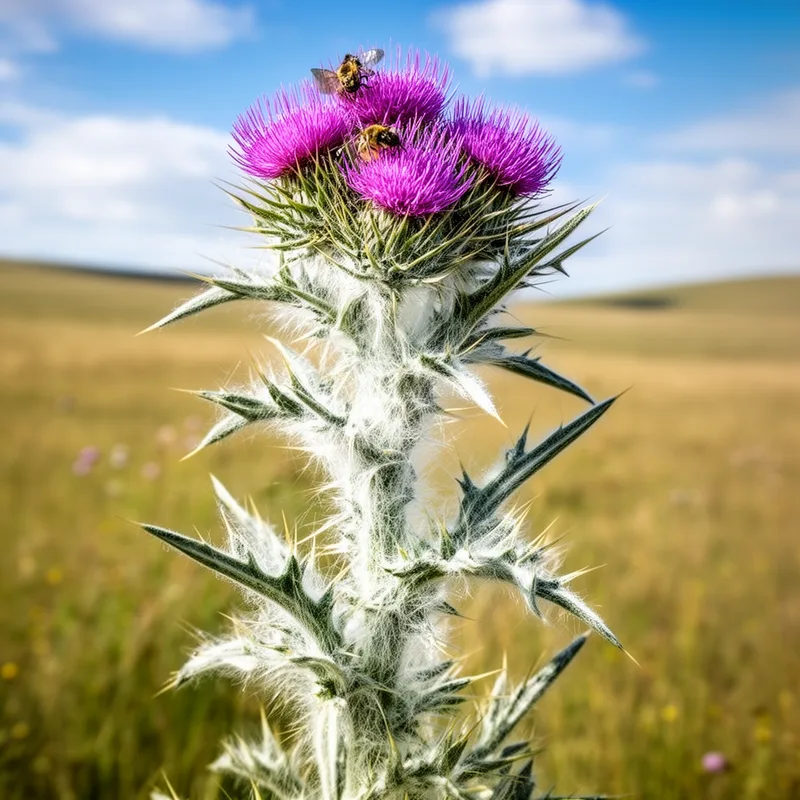
Cirsium flodmanii
- noun
- Specialized
- The white woolly leaves help Cirsium flodmanii conserve moisture in dry environments.
Examples
-
Many pollinators are attracted to the purple flowers of Cirsium flodmanii during the summer months.
-
Cirsium flodmanii is characterized by its distinct white woolly leaves and is commonly found in the grasslands of western North America.
-
Cirsium flodmanii is often found in prairies and meadows across western North America.
-
The Cirsium flodmanii thrives in dry, rocky soils.
-
Have you ever seen a Cirsium flodmanii in bloom?
-
The broad, white woolly leaves of Cirsium flodmanii provide essential moisture retention in its native habitat.
-
You can easily identify Cirsium flodmanii by its unique foliage and vibrant purple flowers during the blooming season.
Synonyms
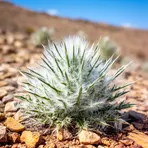
A prickly plant with white hairy leaves found in western North America
Surface Forms
Morphology
Cirsium + flodmanii
The form is a Latin binomial combining the genus name Cirsium (a type of thistle), so a learner who knows 'Cirsium' could infer this refers to a particular kind of thistle. However, 'flodmanii' is a non-lexical species epithet (likely an eponym) and conveys no transparent meaning to a B1 learner, and the taxonomic naming convention itself may be unfamiliar, making the overall expression only partially predictable.
Etymology
Cirsium flodmanii may come from how plants are named: Cirsium is the thistle group and flodmanii likely means it was 'named after' a person called Flodman. So the name gives a simple image—'Flodman's thistle'—which fits this white, woolly-leaved thistle from western North America.

