
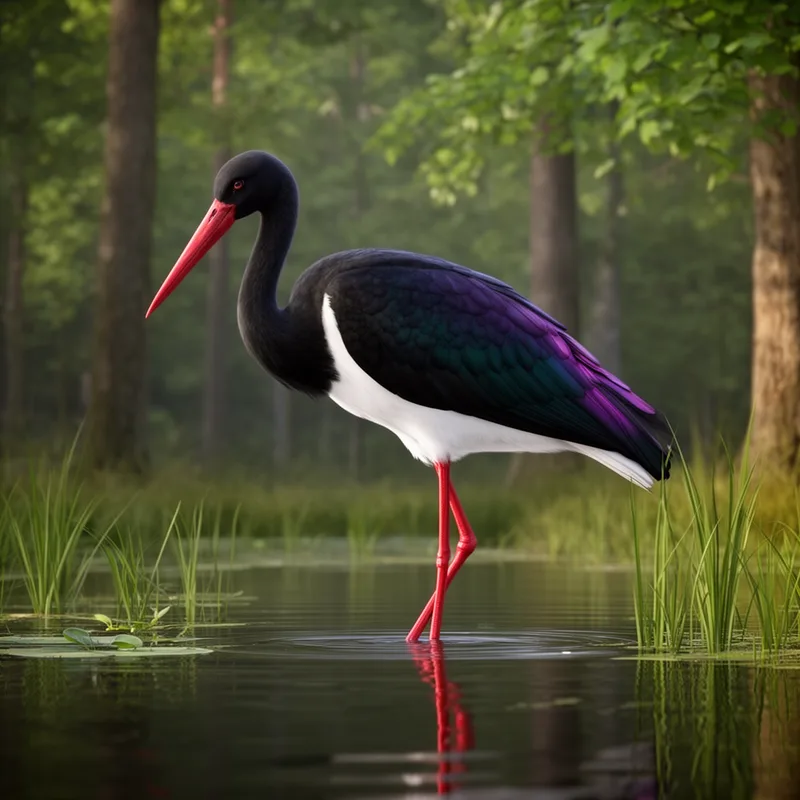
Ciconia nigra
- noun
- Specialized
- Unlike the white stork, the Ciconia nigra is shy and prefers remote forested areas.
Examples
-
During migration, the Ciconia nigra can be spotted in wetlands across southern Europe.
-
Conservation efforts have helped increase the population of Ciconia nigra in several countries.
-
The Ciconia nigra is known for its striking appearance.
-
Have you ever seen a Ciconia nigra in the wild?
-
Conservation efforts have helped increase the population of Ciconia nigra in several countries.
-
During migration, the Ciconia nigra can be spotted in wetlands across southern Europe.
-
Unlike the white stork, the Ciconia nigra is shy and prefers remote forested areas.
Synonyms
A large stork with shiny black back and wings and white belly and chest
Surface Forms
Morphology
Ciconia + nigra
This is a Latin binomial: the genus name 'Ciconia' plus a species epithet. If a learner knows that 'nigra' is the Latin adjective for 'black' and understands taxonomic naming, the meaning 'black Ciconia/black stork' is compositional; however, genus names and Latin epithets are technical and 'nigra' is not provided here, so an average B1 learner would not reliably derive the meaning without extra (scientific or cross‑linguistic) knowledge.
Etymology
Ciconia nigra comes from Latin words: Ciconia means 'stork' and nigra means 'black'. So the name gives a clear picture of the bird, a mostly black 'stork', which is why we call it the 'black stork' today.

