
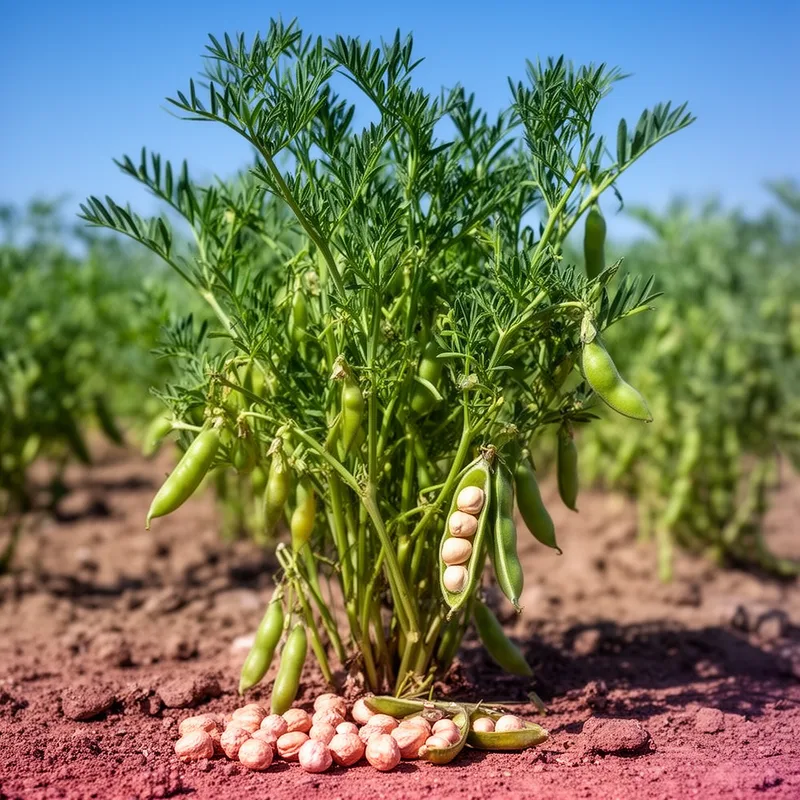
Cicer arietinum
- noun
- /ˈsɪsər ˌɛrɪˈɛtɪnəm/
- Specialized
- The plant Cicer arietinum is commonly known as chickpea.
Examples
-
The protein-rich seeds of Cicer arietinum are used in many traditional dishes.
-
Botanists classify the chickpea as Cicer arietinum.
-
Cicer arietinum is widely cultivated in India, the Middle East, and Mediterranean regions.
-
Did you know that Cicer arietinum is rich in protein?
-
Cicer arietinum is a popular ingredient in various cuisines around the world, especially in India.
-
Farmers grow Cicer arietinum for its nutritious seeds, which are often used in salads and stews.
-
Cicer arietinum thrives in warm climates, making it a staple crop in Mediterranean agriculture.
Synonyms

 1
2.1
1
2.1

A small plant that makes the round pale yellow seeds people eat
A plant with short pods that have one or two round seeds people eat
An annual plant that produces round edible seeds called chickpeas
Surface Forms
Morphology
Cicer + arietinum
This is a Latin binomial taxonomic name (scientific name) rather than a compositional English phrase, so its meaning ('chickpea') is not transparently built from everyday English constituents. One element ('arietinum') is obscure and even knowing 'Cicer' as a genus does not allow a B1 learner to infer the common name without specialized botanical knowledge, making the expression non-derivable from its parts.
Etymology
The scientific name Cicer arietinum may come from two Latin words, cicer, the old name for the 'chickpea', and arietinum, meaning 'like a ram'. One simple story says the small round seed looked a little like a tiny ram's head, so this Latin name stuck as the name for the 'chickpea'.