
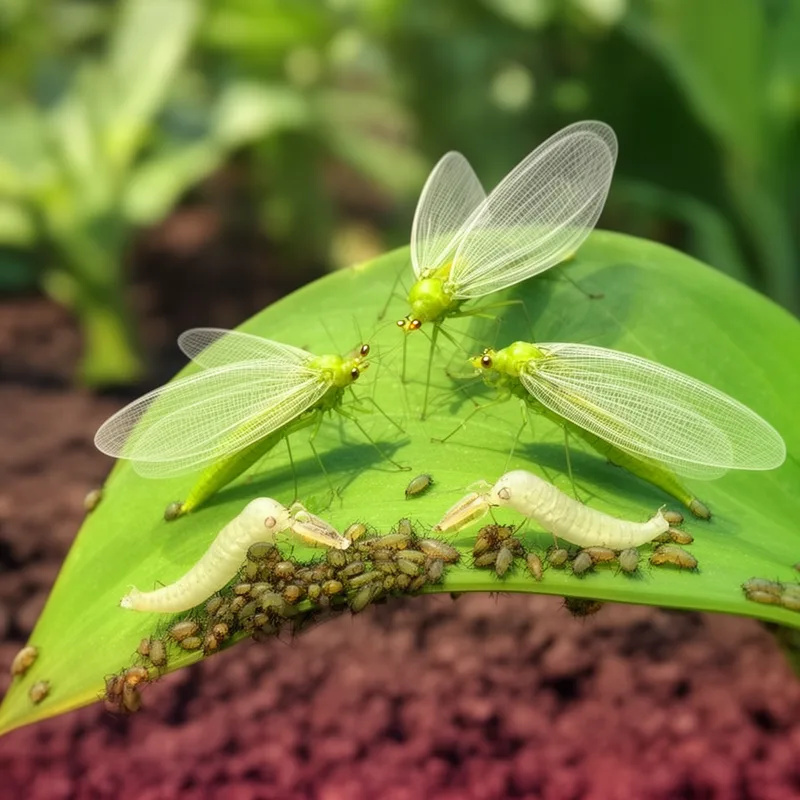
Chrysopidae


 1
9.9
- noun
- /ˌkraɪsəˈpɪdiː/
- Specialized
- Farmers often encourage the presence of Chrysopidae to reduce the need for chemical pesticides.
Examples
-
Researchers studied various species within the Chrysopidae family to assess their effectiveness as biological control agents.
-
The larvae of Chrysopidae are voracious predators of aphids in many gardens.
-
The Chrysopidae family includes many beneficial insects.
-
Did you know that Chrysopidae help control aphid populations?
-
The Chrysopidae family includes green lacewings that are beneficial for gardens.
-
Farmers often introduce Chrysopidae to help manage pest infestations naturally.
-
Children learned about the Chrysopidae during their science class on beneficial insects.
Synonyms
 1
6.3
A small pale green insect with delicate lace-like wings that eats garden pests
Small green insects with thin clear wings whose larvae eat pest insects
Compounds
- Specialized
Small green insects with thin clear wings whose larvae eat pest insects
Surface Forms
Morphology
Chrysopidae = Chrysopa (opaque) = Chrysopa + idae
This is a technical taxonomic formation (genus name + family suffix) whose meaning ('a biological family') is not derivable by general learners from the base form.
Etymology
Chrysopidae comes from Greek parts chrysos 'gold' and ops 'eye', and the ending -idae means a 'family'. So the name points to their bright golden eyes and shows they are a family of green lacewing insects that help control garden pests.