
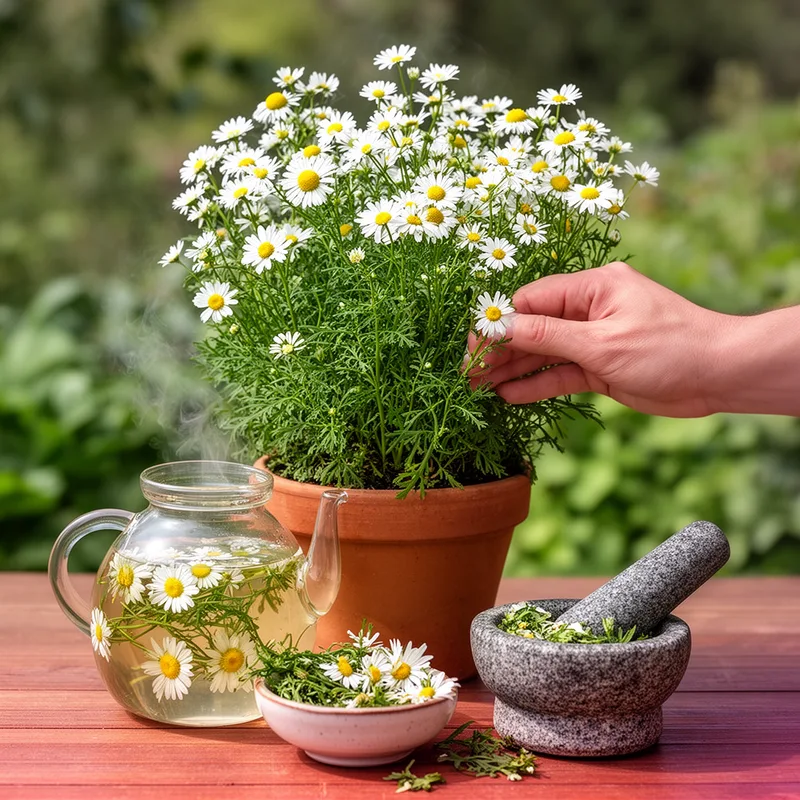
Chrysanthemum parthenium
- noun
- /ˌkraɪsænˈθɛməm ˌpɑrˈθiːniəm/
- Specialized
- Many gardeners plant Chrysanthemum parthenium to repel insects naturally within their flower beds.
Examples
-
The herbal remedy made from Chrysanthemum parthenium has been used to treat migraines for centuries.
-
The Chrysanthemum parthenium blooms beautifully in the garden.
-
I read that Chrysanthemum parthenium is sometimes added to teas for its calming effects.
-
Many herbalists recommend Chrysanthemum parthenium for its medicinal properties.
-
Many people grow Chrysanthemum parthenium in their gardens because it is believed to help with headaches.
-
The herbalist recommended Chrysanthemum parthenium for its traditional use in treating fever and migraines.
-
Years ago, my grandmother used Chrysanthemum parthenium tea to soothe her illnesses and promote wellness.
Synonyms
 1
9.9
1
9.9

A bushy plant with small white daisy flowers used to make medicine

A bushy scented herb with small white daisy-like flowers that people use as a medicine
Surface Forms
Morphology
This is a Latin binomial composed of two plant genus names, so a learner who knows both constituents would recognize it denotes a plant (and Latin scientific names are cross-linguistically transparent in form). However, the precise identity as 'feverfew' and its specific properties (bushy, aromatic, medicinal uses) are not predictable from the genus labels alone, so only the general plant category is recoverable.
Etymology
Chrysanthemum parthenium is better known as 'feverfew' because people long ago used its small white flowers in tea to help fevers and headaches go away. Picture someone picking the tiny blooms to calm a fever — that's why the name and its medicinal use are linked today.