
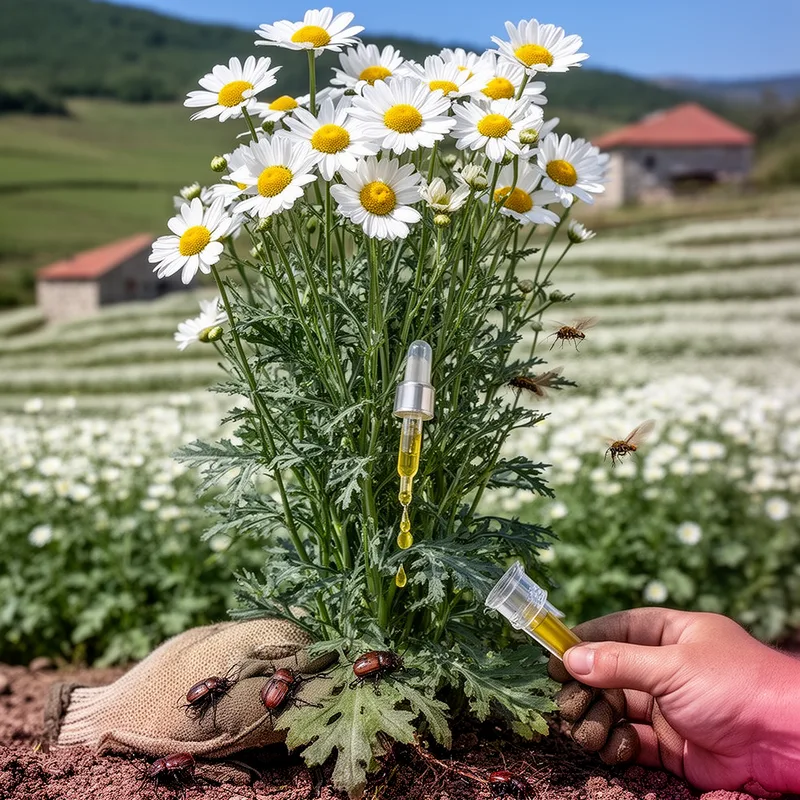
Chrysanthemum cinerariifolium
- proper noun
- Specialized
- The extract from Chrysanthemum cinerariifolium is widely used as an organic insecticide in agriculture.
Examples
-
Farmers in the Balkans cultivate Chrysanthemum cinerariifolium for its valuable pyrethrum-rich flowers.
-
The Chrysanthemum cinerariifolium is often grown for its insecticidal properties.
-
Studying Chrysanthemum cinerariifolium can offer insights into the development of natural pest control methods.
-
I bought some Chrysanthemum cinerariifolium seeds last spring.
-
Farmers in the Balkans cultivate Chrysanthemum cinerariifolium for its valuable pyrethrum-rich flowers.
-
Studying Chrysanthemum cinerariifolium can offer insights into the development of natural pest control methods.
-
The extract from Chrysanthemum cinerariifolium is widely used as an organic insecticide in agriculture.
Synonyms
A white-flowered plant from the Balkans used to make natural insect spray

A white-flowered plant from the Balkans with divided leaves and silky white hairs underneath used as a natural insect killer

A plant with white flowers that people use to make a natural insect spray
Surface Forms
Morphology
Chrysanthemum + cinerariifolium
This is a Latin binomial (scientific) name where the second element 'cinerariifolium' is not a regular English word and provides no transparent clue to the plant's properties; knowing 'Chrysanthemum' alone does not let a B1 learner infer the species-level meaning or insecticidal use. Scientific names function as arbitrary labels rather than compositional English phrases, so the overall meaning cannot be derived from the parts.
Etymology
Chrysanthemum cinerariifolium has a name that paints a small picture: chrysanthemum suggests a showy flower and cinerariifolium hints at ash-coloured, soft leaves, so you can imagine pale leaves with bright blooms. Farmers use its flowers to make 'pyrethrum', a 'natural insecticide', so the name helps you remember this useful white-flowered plant.

