
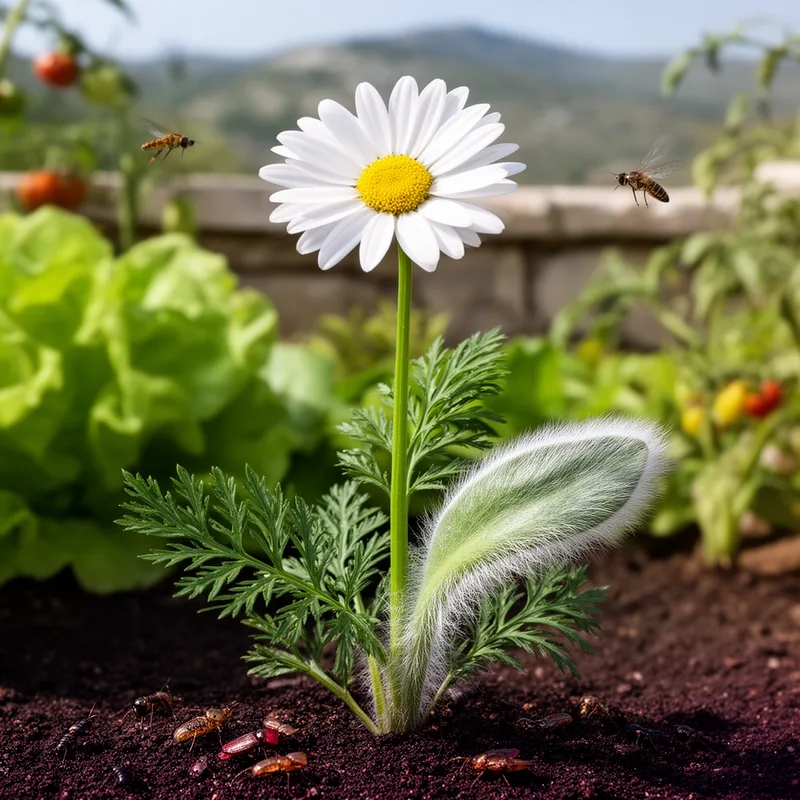
Dalmatia pyrethrum
- noun
- Specialized
- The silky underside of the leaves helps identify Dalmatia pyrethrum in the wild.
Examples
-
Many gardeners plant Dalmatia pyrethrum near vegetables to help repel insects naturally.
-
Many farmers in Croatia grow Dalmatia pyrethrum for its insecticidal properties.
-
Dalmatia pyrethrum has been used for centuries as a natural insecticide in agriculture.
-
The Dalmatia pyrethrum is often used in organic gardening.
-
Many gardeners plant Dalmatia pyrethrum near vegetables to help repel insects naturally.
-
Many farmers in Croatia grow Dalmatia pyrethrum for its insecticidal properties.
-
Dalmatia pyrethrum has been used for centuries as a natural insecticide in agriculture.
Synonyms
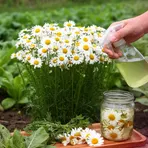
A white-flowered plant from the Balkans used to make natural insect spray
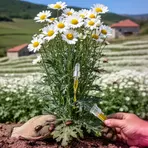
A plant with white flowers from the Balkans that produces a natural insect-killing extract

A plant with white flowers that people use to make a natural insect spray
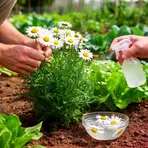
A plant like a daisy whose flowers people use to make a natural insect spray
Surface Forms
Morphology
The compound is a straightforward place + noun combination: 'Dalmatia' names the region and 'pyrethrum' names the insecticidal chrysanthemum, so the phrase denotes a pyrethrum from Dalmatia. Place-of-origin + noun constructions are common cross-linguistically and follow a transparent compositional pattern that a B1 learner who knows both constituents can infer.
Etymology
Dalmatia pyrethrum gets its name from where it grows and what people used it for: Dalmatia is a coastal region in the Balkans, and pyrethrum is the white-flowered plant local people crushed to kill insects. People would grind its flowers and leaves into a powder for gardens and clothes, so the name is linked to its use as a 'natural insecticide'.

