

Chile tarweed
- noun
- /ˈtʃɪleɪ ˈtɑːrˌwiːd/
- Specialized
- Farmers are cultivating Chile tarweed to obtain valuable madia oil.
Examples
-
The sticky leaves of Chile tarweed make it easy to identify in the field.
-
Chile tarweed is native to South America and has recently attracted interest from the biofuel industry.
-
The Chile tarweed is known for its sticky leaves.
-
Farmers often cultivate Chile tarweed for its oil.
-
Farmers are cultivating Chile tarweed to obtain valuable madia oil.
-
Chile tarweed is native to South America and has recently attracted interest from the biofuel industry.
-
The sticky leaves of Chile tarweed make it easy to identify in the field.
Synonyms

A South American herb with sticky leaves grown for its oil-rich seeds

A South American herb with sticky leaves grown for its oil

A South American plant with sticky leaves used to make oil and medicine
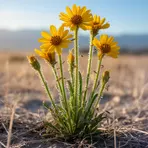
A sticky plant with yellow flowers that grows in western North and South America

Plants with sticky leaves and a strong smell that grow in western North America
Surface Forms
Morphology
The compound is simply a place-name modifier plus a plant type: knowing 'Chile' (the country) and 'tarweed' (a resinous plant) allows a learner to infer it is a tarweed associated with Chile. Place + noun botanical names are compositional and cross-linguistically common, so a B1 learner who knows the parts will understand the meaning.
Etymology
Chile tarweed gets its name from where it grows and how it feels: Chile for the country and tarweed because the plant's leaves are very sticky, like 'tar'. That's why the name fits a South American herb now grown for its 'madia oil'.

