

Chenopodium murale
- noun
- Specialized
- Gardeners sometimes remove Chenopodium murale because it can become a common weed.
Examples
-
Chenopodium murale often grows in disturbed soils along roadsides and fields.
-
Researchers have studied the spread of Chenopodium murale in North American agricultural areas.
-
The Chenopodium murale is often found in disturbed areas.
-
Can you identify a Chenopodium murale in the garden?
-
Chenopodium murale is commonly seen growing in wastelands and alongside highways.
-
In many regions, Chenopodium murale is regarded as an invasive species due to its rapid growth.
-
Farmers need to be aware of Chenopodium murale popping up in their fields as it can hinder crop development.
Synonyms
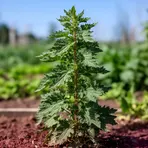
A plant from Europe that lives one year, now common in North America, with coarse, toothed leaves
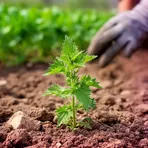
A small plant with jagged leaves that often grows as a weed
Surface Forms
Morphology
Chenopodium + murale
This is a scientific Latin binomial (a proper name for a species). Even if a learner recognizes 'Chenopodium' as a plant genus, the species epithet 'murale' is not a common English word (and here is not attested in the dictionary), so the full meaning 'a European annual plant' cannot be inferred from the constituents by a B1 learner. Taxonomic names function as labels rather than compositional phrases, making the expression non‑derivable from its parts.
Etymology
Chenopodium murale comes from old words meaning 'goose' and 'foot' because its leaves look like a goose's foot. The second word murale means 'wall' because the plant often grows near walls or on roadsides, so the name helps you picture the plant.

