
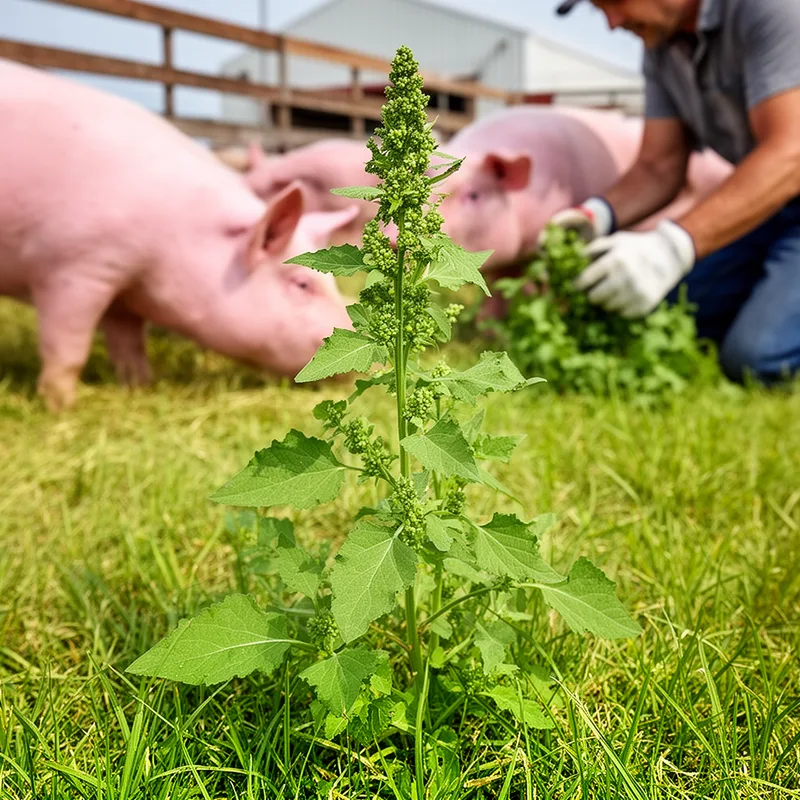
Chenopodium hybridum
- noun
- Specialized
- The botanist identified the plant as Chenopodium hybridum, noting its distinctive leaves and seeds.
Examples
-
Swine were poisoned after grazing on fields overrun with Chenopodium hybridum.
-
Farmers were warned to remove Chenopodium hybridum from pastures to protect their livestock.
-
The Chenopodium hybridum can be found in many fields.
-
Farmers should be cautious of Chenopodium hybridum around their livestock.
-
Farmers were warned to remove Chenopodium hybridum from pastures to protect their livestock.
-
Swine were poisoned after grazing on fields overrun with Chenopodium hybridum.
-
Farmers should be cautious of Chenopodium hybridum around their livestock.
Surface Forms
Morphology
Chenopodium + hybridum
This is a scientific Latin binomial (genus + species epithet). A B1 learner who knows the genus name might infer it refers to a plant, but the specific epithet 'hybridum' is Latin/technical and not transparent to general learners, and the full sense (a particular herb, sometimes poisonous to pigs) is not derivable from common-word knowledge alone. The taxonomic composition gives partial clue but not enough for full comprehension, so it is only partially transparent.
Etymology
Chenopodium hybridum comes from old words meaning goose and foot because the plant's leaves look like a goose's foot. The second word 'hybridum' means 'mixed', so the full name marks it as a particular member of the 'goosefoot' family and helps people recognise the plant, which can sometimes be poisonous to pigs.

