
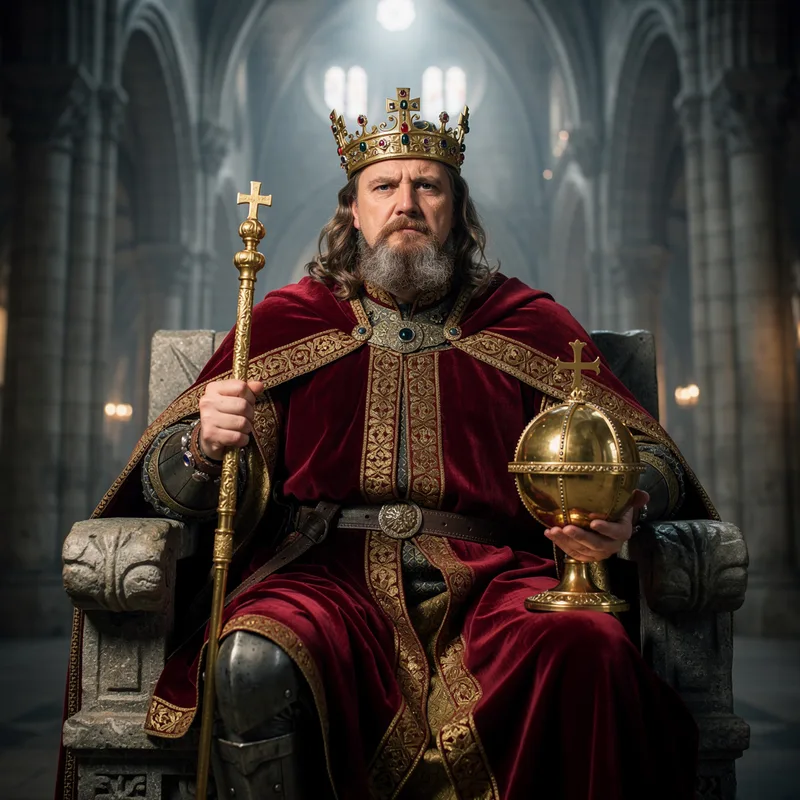
Charlemagne
 6
8.8

- proper noun
- /ˈʃɑːrləˌmeɪn/
- In northern Europe, Jewish merchants under Charlemagne began settling in France and the Rhineland in the eighth century A.D.
- Charlemagne's empire
- Charlemagne's conquest
Loading YouTube…
Watch on YouTubePope Leo the Third was rescued by Charlemagne, put back in Rome.
- Pope Leo the Third was rescued by Charlemagne, put back in Rome.
- The Empire of Charlemagne is an empire that does not last that long.
- And we might even think about the, you know, legendary impossible meeting between Arthur and Charlemagne.
Examples
-
A genealogist friend has traced one branch of his family back to three English kings, another back to Charlemagne.
Fiction book (2000) -
Pope Leo the Third was rescued by Charlemagne, put back in Rome.
-
Fortunately, other texts provide greater insight into Charlemagne's understanding of church space in relation to the dispute.
Academic text (2018) -
The eighth century also witnessed the annexation of the Lombard Kingdom by Charlemagne and the rise of the Papacy as a territorial power.
Academic text (2018) -
Charlemagne was crowned as the Holy Roman Emperor on Christmas Day in the year 800.
-
As king of the Franks, Charlemagne expanded his territory to create one of the largest empires in Western Europe.
-
Charlemagne's reign marked a turning point in European history, as he fostered education and culture during the Carolingian Renaissance.
Synonyms
 1
7.9
King of the Franks who became Holy Roman Emperor and united much of western and central Europe
King who united much of Western Europe and became Holy Roman Emperor in the early Middle Ages
Surface Forms
Etymology
Charlemagne comes from the Latin name Carolus ('Charles') and the word magnus ('great'), so it literally means 'Charles the Great'. That's why the name fits the famous king who became emperor and united much of Europe.